Friday, July 12, 2013

My Mother and Her Neighbors

I received an article this morning about a commemoration ceremony that was held in Warsaw yesterday.

Crowds of Poles gathered to remember the tens of thousands of Poles who were killed between 1943 and 1944 by Ukrainian Nationalists working with their German Nazi colleagues.  July 11 was the day of the worst killing, a day when the Nationalists attacked 100 or so villages.  That was seventy years ago.

My mother's family was killing during this period by her Ukrainian neighbors.  Her mother was murdered, her sister was raped and killed, her sister's baby kicked to death.  My mother, a girl of 19 at the time, was able to survive by breaking through a window and running into a forest to hide.  She was found a couple days later and taken to a slave labor camp in Germany.  She spent the next 2 years in those camps.


My mom and my dad went back to her village in 1988 to see if she could find the graves of her mom and sister and the sister's baby.  There were no graves.  The men who did the killing didn't take the time to dig graves and put up crosses or markers.

During that trip, my mom made it to her old house, the one where the killing took place.  She knocked on the door and when someone answered her knocking, she introduced herself and told them that she had lived in this house when she was a girl, before the killings.

The person who answered the door, a Ukrainian fellow about my mom's age, said that he had been living in the house all his life and he didn't know her and didn't know what she was talking about.

My mom left and never went back.

I haven't written a lot about my mom and her Ukrainian neighbors, but I have written two poems.

The first is called "My Mother was 19," and it's about the day the Nazis and her Ukrainian neighbors came to her house and did their killing.

The second poem is "My Mother's Neighbors."  It's from my book Echoes of Tattered Tongues about my parents, and it tells about what the killers did after they left my mom's house.

My Mother was 19

Soldiers from nowhere
came to my mom’s farm
killed her sister Genja’s baby
with their heels
shot her momma too

One time in the neck
then for kicks in the face
lots of times

They saw my mother
they didn’t care
she was a virgin
dressed in a blue dress
with tiny white flowers

They raped her
so she couldn’t stand up
couldn’t lie down
couldn’t talk

They broke her teeth
when they shoved
the blue dress
in her mouth

If they had a camera
they would’ve taken her picture
and sent it to her

That’s the kind they were

Let me tell you:
God doesn’t give
you any favors

He doesn’t say
now you’ve seen
this bad thing
and tomorrow you’ll see
this good thing
and when you see it
you’ll be smiling

That’s bullshit

_____________________

My Mother’s Neighbors

Their clothes are wet and cold with the blood
of the baby and the women they helped the Germans
kill in the barn.  But they won’t remember that.

They’ll only remember this walk home, the snow
falling fast around them, muting the clicking trees
and silencing the birds.  They will remember

their slow talk, the old men going on about
how the potatoes they gathered this year
could never match the weight of last year’s harvest

the young men trying to hide their joy 
by whispering about the village girls
and what they have seen beneath their dresses.

Later they will all be home.  Already their wives
And mothers watch for them at the windows,

Afraid the snow will catch them far from home.

___________________________________

If you want to read more about the commemoration in Warsaw, here's a link to the article:  Poles Honor Victims.  

I've posted a lot of blogs about my mom over the years.  This is a recent one about remembering her on the anniversary of her death: Remembering My Mom.

Saturday, June 15, 2013

What My Father Ate: A Father's Day Post


My father spent more than 4 years in Buchenwald Concentration Camp as a Polish slave laborer. He was captured in a round up when he went to his village north of Poznan to buy some rope. When he was taken by the Nazis, he was a kid, just 19 years old.

A lot of times when he talked about his experiences, he couldn't help telling me about how hungry he was for those four years. He said that most days he got about 500 calories of food. Once when he complained about the food, the Nazi guard hit him across the head with a club. From that day on, my dad was blind in one eye.

When the Americans liberated the camp, he weighed 75 pounds. My mother said that when she saw him stumble into her camp at the end of a death march, he was skinny, like two shoelaces tied together.  And he was one of the lucky ones. A lot of the guys in his camp didn't make it.

Once I asked him what it was like that first meeting with my mom, he smiled and said, "First, we had something to eat, and then we got married."

__________

I've written a lot of poems about how hungry he was during those four year. The following is one of them. It's called "What He Ate." It appears in my book Lightning and Ashes. Here's a youtube of me reading the poem. I'm posting a copy of the poem itself after the video.


What My Father Ate

He ate what he couldn’t eat,
what his mother taught him not to:
brown grass, small chips of wood, the dirt
beneath his gray dark fingernails.

He ate the leaves off trees. He ate bark.
He ate the flies that tormented
the mules working in the fields.
He ate what would kill a man

in the normal course of his life:
leather buttons, cloth caps, anything
small enough to get into his mouth.
He ate roots. He ate newspaper.

In his slow clumsy hunger
he did what the birds did, picked
for oats or corn or any kind of seed
in the dry dung left by the cows.

And when there was nothing to eat
he’d search the ground for pebbles
and they would loosen his saliva
and he would swallow that.

And the other men did the same.

__________________________________

If you want to read more about my dad, I recommend the poem "What My Father Believed."  Garrison Keillor read it on his radio program a couple of years ago.  Here's the link, just click on it: What My Father Believed.

Saturday, May 11, 2013

Mother's Day Poem


Mother’s Day Poem

I remember my mother, her old house,
the miracle of her love, her fingers
on my cheek brushing away the night,
the world coming home for breakfast,
her eyes asking if I’d been on the road
for long and was the traffic heavy.

Nothing speaks of love like her kindness,
not the birds swirling in the mountains
nor starlight in the trees.  Nothing speaks
of hope like her silent prayers for me
in the morning before school or the bread
and soup she placed before me at night.

Some people seek comfort in a priest,
the way he washes his hands in holy water,
raises his chin to drink the wine.  But it’s mothers
who divide the loaves and fishes, collect
the crumbs, sweep the floor, and find lost coins.
One day they’ll call us home for the last supper. 

___________________________________

To read more about my mom and her life please click on the following:  a blog I did called "Remembering My Mother."  

Thursday, May 2, 2013

Nightmare's End--One Soldier's Story

My wife's Uncle Buddy was one of the GIs who liberated the many concentration camps in Nazi Germany.  Several years ago he was interviewed by documentarians making a film about the liberation of the camps.

Here's a part of his statement:


______________________________

Here's another post I did about Uncle Buddy and his war time experience.  Click here.

Friday, April 26, 2013

Language and Loss


My friend the writer Christina Sanantonio and I have been having a conversation about writing about loss.  It’s a conversation that started right after the suicide of the novelist David Foster Wallace. I posted two blogs about his death and the deaths of writers in general and what they mean to us, and Christina wrote me a long letter about how we use or don’t use language to talk about loss.  She said that, after her brother died unexpectedly, she felt that the language available to her was inadequate to express what she felt about his death.  Here’s a part of what she wrote:


I felt such a great expanse of void between the sense of reality that my grief had laid bare and the experiences of others who had not known despair that I felt I was living in a parallel universe -- alone. The weight and loneliness of my small burden was enough to keep me tottering, and often looking longingly into inky voids. I found myself thrust into a universe where few could speak my language, the complex and limited language of loss.

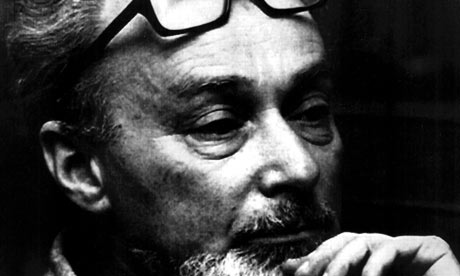
         In trying to explain this feeling, she went on to wrote about Primo Levi, the Holocaust survivor and writer who, like David Foster Wallace, apparently took his own life.  Primo Levi talked about the frustration of trying to write about loss and suffering, especially the loss and suffering so many experienced in the Nazi camps.  He felt sometimes, Christina wrote, that we needed a new language, a language of the lager, a language of the concentration camps.   Common words for “cold, pain, hunger,” according to Primo Levi, could not convey what the people experienced in the camps.  Reflecting on what Primo Levi wrote about the inadequacy of language and what she herself experienced following her brother’s death, Christina wrote that “We ache for a language that doesn’t exist.”
What Christina wrote about her loss and about Levi’s sense of the failure of language touched me.  I’ve spent the last 30 years trying to find words to describe what my parents went through in the concentration and slave labor camps in Germany during World War II and what those experiences made me feel.  Since I was a child, I had heard the stories my father told about what happened to him and my mother.  He told me about how he was picked up during a round-up in his village in Poland, and how he was sent to Germany and spent four years in the concentration camps there.  He told me how my mother was captured by the Germans when they came to her house; how they killed her mother, her sister and her sister’s baby; how my mother survived the killing by breaking through a window and hiding in the woods near her home; and how finally the Germans captured her and took her to Germany as a slave.  My father told me how, in the years my parents spent under the Nazis, they both saw terrible things.  They saw the normal pain and suffering of being prisoners under the Nazis, and they saw floggings, hangings, stonings, shootings, castrations, and rapes.   In one of my poems, “Looking for Work in America,” I wrote that my father “knew death the way a blind man/knows his mother’s voice.”  The same was true for my mother.
           For the last thirty years, I’ve tried to find words to describe my parents’ experiences.  In my poems and my lectures about my parents, I write or talk about the things I heard about, but no matter how powerful the original event described by my mother or father I seldom feel that I can really describe it, explain it, bring it out of the past.  I can’t bring it out of memory into this life.  Despite my best efforts, I’m finally left pushing around some words, trying to find some way to convey what I felt as a child hearing my parents’ story for the first time.  Sometimes, I think I have almost succeeded, most of the time I know I’m not even close. 
         One of the things I’ve tried to do to bring my parents’ experiences out of memory is to use the sort of language they used.   People who read my poems or hear me speak remark on the simplicity of my language and the story-like quality of my poems.  What I’m trying to do is to capture the way I first heard the stories.  My parents had very little education. My father was an orphan and a farm boy in rural Poland; he never went to school.  Even as an adult in America, he could barely write his name.  If he were asked to write his name on a check or a Christmas card, he would become embarrassed.  My mother had a little bit more education.  She spent about two years off and on in a rural school in eastern Poland.  She could write her name, do sums, read a prayer book or a newspaper.  I’ve tried to use the sort of language that my parents’ used.  It was a language free of emotions. When my parents told me many of the stories that became my poems, they spoke in plain, straightforward language. They didn’t try to emphasize the emotional aspect of their experience; rather, they told their stories in a matter-of-fact way. This happened, they’d say, and then this happened:  The soldier kicked her, and then he shot her, and then he moved on to the next room. I’ve also tried to make the poems story-like, strong in narrative drive to convey the way they were first told to me.
         For me the poems that work best are the ones with my parents’ actual language.  Those words, for me, are the real thing.  In one of my poems, my mother says to me, “If they give you bread, you eat it.  If they beat you, you run”; in another poem, my dad tells me what he said to the German guards who beat him and tormented him, “Please, sirs, never tell your children what you’ve done to me today.”  There are bits and pieces of their words scattered through my poems, and when I read those words out loud my parents are there with me.  My parents’ words are a kind of magic for me. 
But how does one convey this magic to other people? 
I think sometimes that all I can do is read my poems out loud and show people how the poems effect me.  I guess what happens then is that my words become like my parents’ words.  I become my father and mother for that moment in the poem.  Sometimes this touches people, conveys the magic to them.
I’ve seen this happen in some of the poetry readings I’ve given.  I was recently giving a reading/lecture, and when I got done, I took questions.  There were some of the usual questions about where in Poland my parents came from and why I wrote poems rather than memoirs.  Then, a person in the back stood up and didn’t say anything.  He looked like he wanted to say something, but he just stood there.  I don’t know if the person even had a question.  Maybe he just wanted to show how much he felt my parents’ lives, or maybe the loss I talked about somehow reminded him of a loss he experienced and couldn’t talk about and still can’t talk about.  For me, that was a moment filled with magic.  My parents’ experiences had somehow survived my translation of them into the word of my poems, and by another miracle, the poems had spoken to another person and touched him with their loss.  A miracle.
 For me one of the central images of the Bible is the image of the Tower of Babel.  It represents in my eyes the moment when humanity became trapped in language that would not communicate what we needed to communicate.   What happened at Babel was a second fall from grace.  Our lives became chained to a language that doesn’t convey what we feel or what we mean.  Although we have this deep need to say what we feel, we often can’t explain it to ourselves or to other people.  
Sometimes our words fail us, and sometimes other people fail us.  They can’t bring themselves to listen to our stories of loss.  It’s hard to take on that burden.  To show you this, I want to tell two stories.  The first is about my father in the concentration camp at Buchenwald.  The second is about my mother and me and a poem I wrote about her experiences. 
 My father used to tell a story about a friend of his in the camps who made love to a woman and contracted VD.  He came to my father and asked him what should he do.  My father looked him in the eye and said, “Go to the river and drown yourself.”  His friend thought he was joking, and he went to another friend who told him, “Tell the Germans what you did.”  He did and they killed the woman; and then they beat him and castrated him and killed him.  Fifty years later, when my father was telling me this story, he still didn’t know what he could have said to his friend to save him from what happened.
And thirty years after writing my first poems about my parents, I’m still not sure I get their experiences right no matter how much I try.  One of the first poems I wrote about my mother is called “Cattle Train to Magdeburg.”  When I wrote it in 1978, I was trying to capture what had happened to her when the Nazis first put in the boxcars and sent transported her from her home in eastern Poland to Magdeburg, Germany, a clearing center for slave laborers sent to Germany.  My sense of what had happened was based in part on what my parents had told me about that experience and what I imagined the experience was like. 
Here’s the poem:

Cattle Train To Magdeburg

She still remembers

The long train to Magdeburg
the box cars
bleached gray
by Baltic winters

The rivers and the cities
she had never seen before
and would never see again:
the sacred Vistula
the smoke haunted ruins of Warsaw
the Warta, where horse flesh
met steel and fell

The leather fists
of pale boys
boys her own age
perhaps seventeen
perhaps nineteen
but different
convinced of their godhood
by the cross they wore
different from the one
she knew in Lvov

The long twilight journey
to Magdeburg
four days that became six years
six years that became forty

And always a train of box cars
bleached to Baltic gray.

This poem was first published in Charles Fishman’s anthology Blood to Remember: American Poets on the Holocaust in the early 1990’s.  When I showed it to my father, he couldn’t read it because he couldn’t read English, and when I showed it to my mother, she wouldn’t read it. That was all in the past, she said. She didn’t want to think about the war and what her life was like in the camps. 
In 2002, a Polish version of Language of Mules, my first collection of poems about my parents, was published, and I showed a copy to my mother. Since my father had died, she’d become more willing to talk about her experiences in Germany. So she took the book and opened it up; the first poem she saw was “Cattle Train to Magdeburg.” She read it straight through and told me what she thought. She said, “That wasn’t the way it was at all,” and then she started telling me what I got wrong in her story about being taken to the concentration camps in Germany.  This was wrong and that wasn’t like that.  She wanted me to know all the things I got wrong.  Despite my best effort to find language to describe her experience, I had failed her and failed her experience.  As I suggested earlier, sometimes our words fail us, and sometimes we fail other people, the ones who want to share their words of loss with us.
My mother’s response to my poem led me to write another poem.  It’s called “My Mother Reads ‘Cattle Train to Magdeburg.’” It’s the Prologue to my recent collection of poems about my parents, Lightning and Ashes.  The language in this poem is pretty much the way my mother gave her reaction to my poem.  After she finished speaking, I took up a legal pad and wrote what I remember her saying.  Here’s the poem:

My Mother Reads "Cattle Train to Magdeburg"

She reads it through and says
“That’s not how it was.
I couldn’t see anything
except when they stopped
the boxcars and opened the doors

And I didn’t see
any of those rivers,
and if I did, I didn’t know
their names. No one said,
‘Look, look this river
is the Warta, and there
that’s the Vistula.’

What I remember
is the bodies being
pushed out—sometimes
women would kick them out
with their feet.

Now it sounds terrible.

You think we were bad women
but we weren’t. We were girls
taken from homes, alone.
Some had seen terrible things
done to their families.

Even though you’re a grown man
and a teacher, we saw things
I don’t want to tell you about.”

If she were still alive and I were to show her this second poem, I’m betting she would say the same thing she said after I showed her the Polish version of the earlier poem, “That wasn’t the way it was at all,” and I know she would be right.
         Christina Sanantonio said, “We ache for a language that doesn’t exist.”  We all want this language.  Christina wants it so she can tell me and other people how much his death means to her.  Primo Levi wanted it so that he could tell you what hunger and snow and wind meant to a man standing through a six-hour roll call with other prisoners in Auschwitz.  We want others to understand what we have suffered and what we have lost.  This is the “ache” that Christina talks about.  It is a part of language as sure as the word “the.”  We ache for a language that doesn’t exist so that we can tell someone what we need to say.  And even when we feel that there is no point in struggling with words to capture what we need to say, we still have to try.  No matter how hard it is to tell someone something, no matter how much we misunderstand what someone is telling us, no matter how hard it is to get beyond the Babel we’re caught up in, I think we need to try.
         Will it change the world?  Make anything different?  Better?
We can only hope.


Tuesday, April 9, 2013

Liberation of Buchenwald Concentration Camp, April 11, 1945


On April 11, 1945, American troops liberated Buchnewald Concentration Camp.  It was a large camp housing about 80,000 prisoners, Poles, Slovenians, Frenchmen, Africans, and others.  They were brought there to work in the factories that the Germans built in and around the camp. 

We have a lot of documentation and photos from this liberation because the great American journalist and photographer Margaret Bourke-White was with the US Army when they liberated this camp.  She took photographs that captured the suffering of the men who were in the camp.

Here’s one of her photos.


My father was a prisoner in this camp for four years.  He was just a Polish farm boy, and he was captured when he went into his village to buy a piece of rope one Saturday.  The Germans had surrounded the village and were rounding up men and boys to go to Buchenwald and work in the factories there.

A lot of times when we think of Concentration Camps we imagine the death camps the Germans built in Poland where the primary business was killing large numbers of civilians.  Buchenwald wasn’t a death camp.  Millions did not die there, burned in the ovens, their ashes scattered in ponds where the water is still gray 70 years later.  But they did die there.  About one out four people died each year. 

What did they die of in Buchenwald?

Mainly starvation.  Fifty years later, my dad could still remember the hunger he felt.  He did hard labor 6 and even 7 days a week, 12 and 14 hour days, on a handful of food a day.  I’ve read accounts of what the men ate.  It came to about 600 calories a day. How much is that?  A Big Mac with Cheese is about 700 calories.  A Big Mac without cheese is 600.  But what my dad ate wasn’t a Big Mac.

I asked my dad once how he was able to stay alive.  He shrugged and said he didn’t know.  He said that most of the time the guards gave them a kind of gray gruel made out of some kind of grain and animal bones.  My dad called it “Hitler’s secret weapon.”  It wasn’t enough to keep a man alive, so my dad was always looking for things to stick into his mouth: twigs, pieces of paper, bits of cloth, leather buttons.  Once when he complained about the food, a guard hit him across his head with a club.  He knocked my dad down to the ground, but my dad got up and begged for food.  It was the wrong thing to say.  The guard clubbed my dad unconscious.  When my dad awoke, he was blind in one eye. 

But men didn’t only die of hunger.  People died for simple infractions, annoying the guards by urinating out of turn, slouching in line, standing in the wrong place. 

They died of cruelty too.  My father told me a story about one cold January night when the 400 men in his barracks were called out into the square for a roll call.  The men were dressed in rags, torn pants and shirts.  Some had shoes, others didn’t.  They had almost no protection from the snow and wind.  The guards lined them up in rows and told them they had to check the roster of prisoners, and then the Germans started reading the long lists of names.  As the guards read, men started dropping into the snow, falling to their knees and then keeling over.  And the guards kept reading.  They read through the roster once and then they said, “Oops, we missed a name,” and then they read through the roster again and again and again for six hours while men fell to their knees and died in the snow.  The next morning garbage carts came and collected the dead and took them to the ovens.  

Others died from overwork, hangings, experiments, crucifixions.  One of my father’s friends, an artist from Wilno, was first castrated and then hanged. 

One in every four died like this.  A lot of Margaret Bourke-White’s photos are of the dead, in piles like worthless paper, like rubbish.

But there are also many pictures of those who survived.

And when I look at the photos Margaret Bourke-White took the day the camp was liberated, I look for the face of my dad.  Thin as a shoelace, blind in one eye, with a scar across his skull where the guard beat him and beat him and beat him.  I haven’t found my dad yet, but I know I’ll recognize him when I see him.  

In the Spring the War Ended


For a long time the war was not in the camps.
My father worked in the fields and listened
to the wind moving the grain, or a guard
shouting a command far off, or a man dying.

But in the fall, my father heard the rumbling
whisper of American planes, so high, like
angels, cutting through the sky, a thunder
even God in Heaven would have to listen to.

At last, one spring day he knew the war was there.
In the door of the barracks stood a soldier,
an American, short like a boy and frightened,
and my father marveled at the miracle of his youth

and took his hands and embraced him and told him
he loved him and his mother and father,
and he would pray for all his children

and even forgive him the sin of taking so long.

__________________________________________

The photo above was taken by Margaret Bourke-White.

If you want to know more about my dad and his experiences in the war, you can get a copy of my book Echoes of Tattered Tongues, available at Amazon.  Echoes contains the chapbook Third Winter of War: Buchenwald, about my dad's experiences in that camp.


Friday, March 29, 2013

What My Father Believed: An Easter Post


My father grew up in poverty, an orphan working on a farm in Poland. When he was 20, he was taken to a concentration camp in Germany.  He didn't have much education at all, could barely read and write. But he had faith. This is a poem about what he believed.


What My Father Believed


He didn’t know about the Rock of Ages
or bringing in the sheaves or Jacob’s ladder
or gathering at the beautiful river
that flows beneath the throne of God.
He’d never heard of the Baltimore Catechism
either, and didn’t know the purpose of life
was to love and honor and serve God.

He‘d been to the village church as a boy
in Poland, and knew he was Catholic
because his mother and father were buried
in a cemetery under wooden crosses.
His sister Catherine was buried there too.

The day their mother died Catherine took
to the kitchen corner where the stove sat,
and cried.  She wouldn’t eat or drink, just cried
until she died there, died of a broken heart.
She was three or four years old, he was five.

What he knew about the nature of God
and religion came from the sermons
the priests told at mass, and this got mixed up
with his own life.  He knew living was hard,
and that even children are meant to suffer. 
Sometimes, when he was drinking he’d ask,
“Didn’t God send his own son here to suffer?”

My father believed we are here to lift logs
that can’t be lifted, to hammer steel nails
so bent they crack when we hit them.
In the slave labor camps in Germany,
He’d seen men try the impossible and fail.

He believed life is hard, and we should
help each other.  If you see someone
on a cross, his weight pulling him down
and breaking his muscles, you should try
to lift him, even if only for a minute,
even though you know lifting won’t save him.

______________________


Garrison Keillor reads my poem at his Writers Almanack.  Click here: http://writersalmanac.publicradio.org/index.php?date=2007/12/28