Friday, March 25, 2016

Easter Poem


My father wasn't an educated man.  He was born on a small farm in western Poland and never attended school.  He used to joke that the German concentration camp he spent 4 years in was his college and university.

He didn't know much about stuff most of us take for granted.  One of the things he didn't know much about was religion.  You couldn't talk to him about things like Moses or the Garden of Eden or the Holy Trinity, even though he was born a Catholic.

But he had a strong faith, and there were things that he believed with a certainty as sure as the turning of the earth.   This is a poem about that.

What My Father Believed 

He didn’t know about the Rock of Ages
or bringing in the sheaves or Jacob’s ladder
or gathering at the beautiful river 
that flows beneath the throne of God.
He’d never heard of the Baltimore Catechism
either, and didn’t know the purpose of life 
was to love and honor and serve God.

He‘d been to the village church as a boy 
in Poland, and knew he was Catholic
because his mother and father were buried 
in a cemetery under wooden crosses. 
His sister Catherine was buried there too. 

The day their mother died Catherine took 
to the kitchen corner where the stove sat,
and cried.  She wouldn’t eat or drink, just cried
until she died there, died of a broken heart.
She was three or four years old, he was five.

What he knew about the nature of God 
and religion came from the sermons
the priests told at mass, and this got mixed up
with his own life.  He knew living was hard, 
and that even children are meant to suffer.  
Sometimes, when he was drinking he’d ask,
“Didn’t God send his own son here to suffer?”

He believed life is hard, and we should
help each other.  If you see someone 
on a cross, his weight pulling him down 
and breaking his muscles, you should try 
to lift him, even if only for a minute,
even though you know lifting won’t save him.

_____________________________

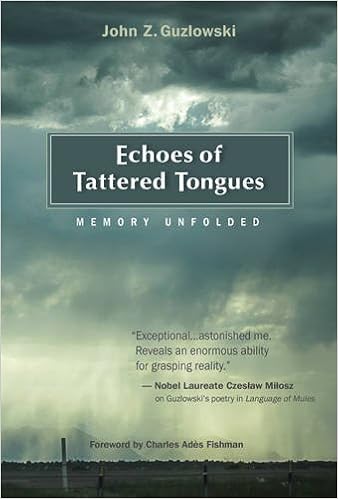
The poem is taken from my book Echoes of Tattered Tongues, available from Amazon.

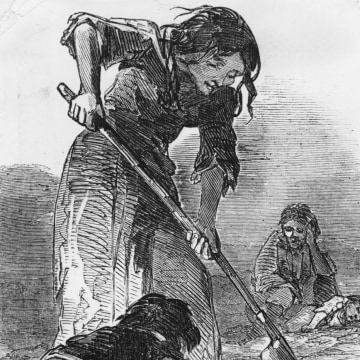
The illustration at the top of the page is by the artist Voytek Luka from my book Third Winter of War: Buchenwald.

Thursday, March 17, 2016

St. Patrick's Day Poem: Quarantine by Eavan Boland


In honor of St. Patrick's Day, here's one of the great contemporary Irish poems by the poet Eavan Boland, a poet who has inspired so much of my own writing.
Quarantine
In the worst hour of the worst season
    of the worst year of a whole people
a man set out from the workhouse with his wife.
He was walking – they were both walking – north.

She was sick with famine fever and could not keep up.
     He lifted her and put her on his back.
He walked like that west and west and north.
Until at nightfall under freezing stars they arrived.

In the morning they were both found dead.
    Of cold. Of hunger. Of the toxins of a whole history.
But her feet were held against his breastbone.
The last heat of his flesh was his last gift to her.

Let no love poem ever come to this threshold.
     There is no place here for the inexact
praise of the easy graces and sensuality of the body.
There is only time for this merciless inventory:

Their death together in the winter of 1847.
      Also what they suffered. How they lived.
And what there is between a man and woman.
And in which darkness it can best be proved.

Monday, March 14, 2016

ECHOES OF TATTERED TONGUES: MEMORY UNFOLDED


My new memoir in prose and poetry about my family and its experiences during and after World War II is now available.

Here are some early reviews and responses: 


“A searing memoir.” Shelf Awareness

"Devastating, one-of-a-kind collection.” Foreword Reviews


“Powerful...Deserves attention and high regard.” Kevin Stein, Poet Laureate of Illinois

“Deeply moving. A powerful, lasting, and sometimes shocking book. Superb.” Kelly Cherry, Poet Laureate of Virginia

“Unforgettable. An historical and literary revelation.” Cosmopolitan Review

“Exceptional…even astonished me…reveals an enormous ability for grasping reality.” Nobel Laureate Czesław Miłosz on Guzlowski’s earlier work.


The book is availble from Amazon and other bookstores.  


Tuesday, March 8, 2016

International Woman's Day


My mother was taken to Germany as a slave laborer in 1942 after seeing the women and girls in her family raped and killed by the Germans.

She worked in various small camps.  The work was brutal, and when she first arrived in Germany in November, the cold and snow was so bad that she didn't think she would survive a week.  She survived 3 years.

This is a poem about her.


WHAT THE WAR TAUGHT HER

My mother learned that sex is bad, 
Men are worthless, it is always cold 
And there is never enough to eat.

She learned that if you are stupid
With your hands you will not survive
The winter even if you survive the fall.

She learned that only the young survive
The camps. The old are left in piles
Like worthless paper, and babies
Are scarce like chickens and bread.

She learned that the world is a broken place 
Where no birds sing, and even angels
Cannot bear the sorrows God gives them.

She learned that you don't pray 
Your enemies will not torment you. 
You only pray that they will not kill you.

____________

The poem is from my book about her and my dad: Echoes of Tattered Tongues: Memory Unfolded

Monday, March 7, 2016

A Question about the War


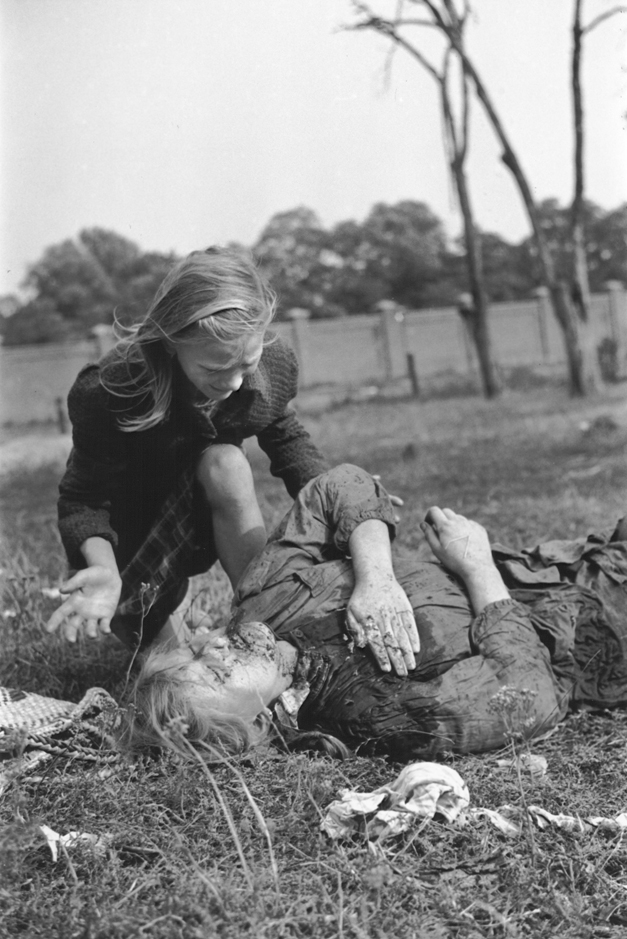
What can we say about the past when so much of the past is lost? My mother felt the weight of her mother's death and her sister's death and her sister's baby's death at the hands of the Nazis all her life, but what can I know of those deaths. There was my mother's horror when she told me the stories, but my mother could not tell me much without breaking down, turning her face and its tears away from me. And so what's left to learn, what can I know about my mother's grief, my grandmother's face when she was shot again and again, my aunt's absolute sorrow when she saw her baby daughter kicked to death, the baby's screams that would not stop. There are no photographs of what happened, no news reports, no eye witnesses now that even my mother is gone, and all that's left is just a handful of broken memories that will never truly belong to me. What's left to say?

_______________________

The image above is taken from Siege, an Oscar nominated documentary about the German invasion of Poland. It is available from Aquila Polonica Press. Click here.

Friday, February 19, 2016

What Kept People Alive in the Concentration Camps?


On Hope and Survival -- From an Interview I gave to Rattle Magazine:

RATTLE: The line “hope is the cancer no drug can cure” from “My Father Dying” struck me, because it so contradicts the way most of us define hope—as a sort of karmic wish that will aid in bringing us what we want, rather than the role it serves in the book as a foolish and fruitless burden. It interests me that our society, while overtly acknowledging the horrors of the Holocaust, seems to take a sugarcoated view of it: our films about it often temper the overwhelming suffering with “the strength of the human spirit”; we tend to toss around words like “hope” and “courage” when we talk about it. Your book, however, is unflinchingly raw and honest, refusing to do the cheap work of shining artificial light on darkness. Do you agree that the American view of the experience of the Holocaust is overly redemptive? Was it a conscious decision to write about such horrific events in an unapologetic way?
GUZLOWSKI: I was brought up on those redemptive books and movies about the Holocaust and the world of survivors that was depicted in films like Exodus, Diary of Anne Frank, Life is Beautiful, and Schindler’s List. I remember watching Schindler’s List with my mother and asking her at the end of the movie what she thought. She looked at me as if I were an idiot and said, “They can’t make movies about what really happened.”
I’m sure hope and courage were important in the camps, but probably what was most important was luck. I asked both of my parents how they were able to survive the war, and they both said they didn’t know. My father didn’t know why he didn’t die when so many of his friends did. He once told a story about being hauled out of his barracks with hundreds of other prisoners for a roll call. It was a January night, snowing and below zero, and the men were in rags. The guards started doing a roll call, and as they read the names men began to drop from the cold, falling to their knees. A man here and another there and then more. When the guards finished the roll, there were dozens of dead prisoners in front of the barracks. But they didn’t let the men go back in the barracks. Instead, the guards started the roll again, and more men collapsed. That roll call went on for six hours. At the end, garbage trucks came to pick up the dead. My father didn’t know what kept him alive.
What I’m trying to do in the poems is stay true to my parents’ experiences. My mother was especially unsentimental about what happened to her. As a girl, she had seen her family killed, and then she went on to suffer for two and a half years as a slave laborer in Nazi Germany. After the war, she lived for six years in refugee camps, camps where they had mass graves for the babies that were born to the women following the war, women whose bodies weren’t strong enough to carry their pregnancies to fruition. I think it’s hard to believe in hope and courage when you have that kind of experience.
I hope you don’t mind but here’s a poem I wrote about my sense of what my mom believed:

WHAT THE WAR TAUGHT HER
My mother learned that sex is bad,
Men are worthless, it is always cold
And there is never enough to eat.
She learned that if you are stupid
With your hands you will not survive
The winter even if you survive the fall.
She learned that only the young survive
The camps. The old are left in piles
Like worthless paper, and babies
Are scarce like chickens and bread.
She learned that the world is a broken place
Where no birds sing, and even angels
Cannot bear the sorrows God gives them.
She learned that you don’t pray
Your enemies will not torment you.
You only pray that they will not kill you.

Of course, not everyone had the experiences my mom had. Some, I’m sure, survived through hope and courage. I’ve met and spoken to a lot of survivors over the years. What it’s taught me is that different people looked at what happened differently and tried to make sense of it differently.

___________________

To read the entire Rattle interview, click here.

The book Echoes of Tattered Tongues, about my parents and their experiences, is available from Amazon and most bookstores.  

Friday, February 12, 2016

Echoes of Tattered Tongues: Valentine's Day -- Why My Mother Stayed with My Father

My parents met in a concentration camp in Germany toward the end of World War II.


My mom had been brought to Germany by the Nazis to work in a slave labor camp. The day she was captured she saw her mom and her sister and her sister's baby killed by German soldiers. My mom was crying so much when she got to the camp that one of the guards said if she didn't stop crying they would shoot her.

Near the end of the war, my dad and some other slave laborers were brought to my mom's camp by German guards who were escaping the Russians. The Germans left him there and fled toward the American lines. When my mom saw my dad, he was a scarecrow in rags. He weighed about 70 pounds and had only one eye. He had lost the other when a guard clubbed him for begging for food.

She was 23, he was 25. She had been a slave for 2 years, he had been one for 4.

They met in that camp, and after liberation they did what a lot of people did. First, they had something to eat, and then they got married.

It was a hell of a marriage. They fought and argued for the next 50 years -- even on Sunday mornings -- and even on Christmas Day.

It got so bad at times that -- after we came to America -- my sister and I would plead with my parents to get a divorce.

They never did. When my dad died in 1997, they were still married. 52 years.

When I was about 57 or 58, I started wondering why they didn't get a divorce, why they stayed together through all the misery they put each other through. The answer to that question became a poem in my book about them, Echoes of Tattered Tongues.


Why My Mother Stayed with My Father

She knew he was worthless the first time
she saw him in the camps: his blind eye,
his small size, the way his clothes carried
the smell of the dead men who wore them before.

In America she learned he couldn’t fix a leak
or drive a nail straight. He knew nothing
about the world, the way the planets moved,
the tides. The moon was just a hole in the sky,

electricity a mystery as great as death.
The first time lightning shorted the fuses,
he fell to his knees and prayed to Blessed Mary
to bring back the miracle of light and lamps.

He was a drunk too. Some Fridays he drank
his check away as soon as he left work.
When she’d see him stagger, she’d knock him down
and kick him till he wept. He wouldn’t crawl away.

He was too embarrassed. Sober, he’d beg
in the bars on Division for food or rent
till even the drunks and bartenders
took pity on this dumb polack.

My father was like that, but he stayed
with her through her madness in the camps
when she searched among the dead for her sister,
and he stayed when it came back in America.

Maybe this was why my mother stayed.
She knew only a man worthless as mud,
worthless as a broken dog would suffer
with her through all of her sorrow.

________

If you want to read more about my parents, you can read an article I wrote about how they met in a concentration camp at the end of the war.  Here's the link: How My Parents Met.

You can also heck out a couple of the blogs here that talk mostly about them. One is called DPs in the Polish Triangle about what my mom and dad were like when they got to America. Another is called The Wooden Trunk We Carried With Us From Germany. There's also The Day My Mother Died.

Just click on the above titles, and it will take you right to them.

My book about my parents is called Echoes of Tattered Tongues: Memory Unfolded, and it's available from Amazon.