Tuesday, February 13, 2018

A Valentine's Day Story -- How My Mom and Dad Met in a Slave Labor Camp


My mom had been brought to Germany to work in a slave labor camp. The day she was captured she saw her mom and her sister and her sister's baby killed by German soldiers. My mom was crying so much when she got to the camp that one of the guards said if she didn't stop crying they would shoot her.

Near the end of the war, my dad and some other slave laborers were brought to my mom's camp by German guards who were escaping the Russians. The Germans left him there and fled toward the American lines. When my mom saw my dad, he was a scarecrow in rags. He weighed about 70 pounds and had only one eye. He had lost the other when a guard clubbed him for begging for food.

She was 23, he was 25. She had been a slave for 2 years, he had been one for 4.

When I would ask my dad what it was like when they met, he would smile and say, "First we had something to eat.  Then we got married."   My mother's version was a little more complete.  Here's the way she told the story in a piece from my book about them, Echoes of Tattered Tongues: Memory Unfolded.


My Mother Tells Me How She Met My Father

I first saw him in front of the barracks. He was walking with six other prisoners, a German soldier behind them pushing at them with some kind of rifle. Your father wasn’t how he is now. He was skinny then, like two shoelaces tied together.

I was not such a prize after three years in the camps either. When the Americans came, they weighed me and found I was less than a 100 pounds—and what was I wearing? You want to know? Woolens on my legs, a gray rag to hide my hair, a striped dress.

And him? Your father? Like I said, skinny with a bleeding towel across his face from where he lost his eye.

Still, he walked up to me, took my hand, and said in Polish, “ProszÄ™, pani.”

Yes, he said, “Please, miss,” and like a proper gentleman, he clicked his heels. I thought he was at least a count, maybe a prince.

Then just before your dad had a chance to kiss my hand, the German behind him kicked him in the pants and said, “Dummkopf, raus!” Get moving, dummy!

Your father was like that. Always putting on airs, even then in the camps talking of Polish honor as if he and Poland shared a soul.

Really, he was worthless. I wish he had left me there in the camp. He couldn’t drive a car, he couldn’t fix a leaky roof.

When I asked him in the refugee camp to help me pack to come to America, he took a little drink and bundled all the clothes together in a bedspread like America was across the street.

The fool, I should have kicked him like the German soldier did when I met him.


Instead, I kissed him and wept.

________

If you want to read more about their life together, check out my Echoes book or my blog.  Here's a piece in fact about their life in America and how hard it was sometimes for them and why they stayed together:  Why My Mother Stayed with my Father.  (You can click on these links.)

Saturday, February 3, 2018

Subway Dreams


Subway Dreams

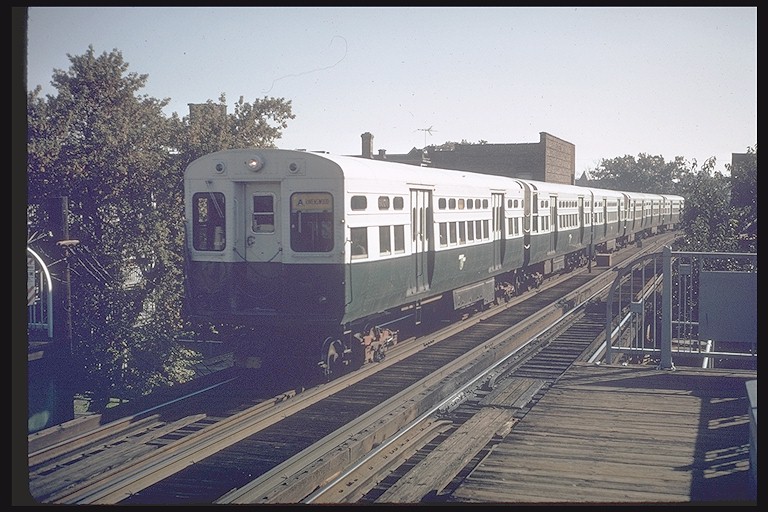
I lived at the end of the Ravenswood El in Chicago for years.

All day and all night subway cars pulled into the terminal.  I heard their wheels scraping against the metal rails in my sleep, and this gave me dreams and nightmares of subways and subway tunnels.

In these dreams I walked through the underground world of Chicago, met the people living in those tunnels, the husbands and wives and the frogs they gave birth to.

One time one of these frogs somehow got into my mouth and crawled into my body, through my stomach and into my womb.  Even though I was a guy, there was only one thing I could do to get rid of it.

In the darkness of the subway tunnels of Chicago, I gave birth to a blue frog.

Wednesday, January 17, 2018

True Confessions -- 1960s


1960s

I took acid 3 times, cocaine twice, pot about 3 times a week for 6 years, vodka/beer/tequila just about every day.
I smoked too. A pack a day. A pack was about 25 cents when I started. Sometimes when I ran out of cigarettes I smoked a pipe.
I also drank about 10 cups of coffee a day. In the morning and in the evening and at 3 in the morning.
I don't think I ever slept. Maybe once or twice. I remember one time being awake for 3 days and waking up behind a gas station in Moline, Illinois.
But most of the time I didn't sleep. At night I lay in bed, drunk and stoned and coffeed up, listening to the Doors.
Sometimes there was a girl with me.  Stoned or sober.  It didn’t matter.
Either way, Jim Morrison would be singing.
"This is the end, my friend. This is the end."
I believed it and didn't care.
________
I'm finishing up a book of autobiographical poems called True Confessions.  It covers my life from about 1965 to about yesterday.  Each section begins with a short prose prologue.  This is the one for the 60s. 

Here's one of the 60s poems:

Talking Drunk to a Drunk Woman I don’t Know

The party’s in another room
but the hallway is safe for silence
and she tells me there is something in winters
that keeps them coming back again and again
and I laugh because I think she said sinners

so again I ask where she comes from
and she tells me there are moons
that never see sunlight, books that never
see rain, and I try to shake my head clear

but it doesn’t help because she starts again:
telling me about the windows in the attic
the basement in her dreams, the cost
of friction when friction means dreaming

I try to stand to go to the bathroom
but she pulls me down into a puddle of bones
and finally I know her words make sense.

Thursday, November 16, 2017

1945: A Savage Peace


This morning I watched 1945: A Savage Peace, a BBC documentary on what happened to the ethnic German civilians living in Eastern Europe immediately after the war.

A brutal film.

I knew that they suffered, that the Russians raped and killed many as they moved west, but I had no idea about how the Poles and Czechs took vengeance on these German civilians.

Some of the documentary footage of Czechs shooting and hanging German civilians is very disturbing.

Also the interviews with the German children who survived this brutality are hard to listen too.

My only complaint is that there is too little made of the German atrocities committed during the war that inspired this revenge.  That seems forgotten, and I wonder if this is simply another way of changing how the world sees the Germans and the war.

Overall, the film tells me once again that war is shit.

The film is available on Netflix.

I recommend it.

Here's a link to a Daily Telegraph article about the documentary. Just click here: Link


Wednesday, November 15, 2017

Bad People

Bad People

People being evil?  Why do they do it?

I don't know.  But they seem to be doing it a lot more.  There was that book that came out last year or the year before about how civilization is more civilized than it was in the old days.

I find that hard to believe.  I remember giving a reading/presentation about my parents for a class of college students studying genocide.  I don't know if the students learned anything but I learned that more people have died of genocide since the UN establised it's policies against genocide in the early 1950s than died in the Holocaust.

I'm always astonished when I find out stuff like that.  I look around my house and my neighborhood and my city and my state and my country, and I see that sure there's some bad people here and there but where are the millions of bad people who are ready to kill millions of their neighbors.

One of my favorite journalists is Rszyard Kapuscinski (a Pole who grew up under communism)  who wrote a book called Shadow of the Sun about his travels among the genocidists of Africa.  He went here and he went there trying to track down the causes of the killing.  They were always absurd, meaningless, trivial.

What I took away from that book is that people can do bad things for the most absurd, meaningless, trivial reason and no law of God or man can stop them.

My father -- a concentration camp survivor -- felt that all Germans were evil.  When I was a kid, he wouldn't let me play with kids with German names like Mueller or Rickert or Hauser.

Was he right?  I asked my mother -- also a survivor -- what she thought of the Germans.  She said some were good, some bad.

I guess that's what we have to remember.  Some people can be bad, will be bad.

So here I am a 69 year old still trying to sort out the truths my parents left me.

Tuesday, November 14, 2017

Found Book

A Found Book

You pick up a book of poetry off of one of the shelves in your study, and you wonder where it came from. 

There’s nothing you remember about it. 

The light tan cover? 

The title?

The author’s name?

Nothing.

Was this author a friend whose name you’ve forgotten? Or did another friend give you the book, telling you to read it because it meant so much or so little to him?

You don’t remember.

You turn to the blurbs on the back and discover the book is 40 years old, and you realize it’s probably been sitting on your bookshelves for that long.

You’ve moved it from one house to another through those 40 years and you never once opened it. It’s sat on those shelves through storms and deaths, through crises and miracles, and you never opened it.

And now you do.

You open it.

And the words are magic.

But only for a second.

Thursday, October 19, 2017

First Snow in a Refugee Camp in Germany


I still remember the first time I saw snow.

I was almost three years old, living in a refugee camp in Germany.

The snow fell thick and fast on a convoy of camouflaged army trucks moving through the camp.

I stepped outside of the barracks without shoes on.  I didn't know the snow would be cold and wet, but that didn't matter, the cold and the wet.

I stood in the white swirl and put both hands out to catch the flakes.