Showing posts with label war poetry. Show all posts

Monday, November 19, 2012

Landscape with Dead Horses, Sept. 1939


73 years ago on September 1. 1939, the Germans invaded Poland. Their blitzkrieg, their lightning war, came from the air and the sea and the sky. By Sept 28, Warsaw, the capital city of Poland, gave up. By October 7, the last Polish resistance inside Poland ended.  In the six years that followed, more than five million Poles died.

A couple years ago, I received an email from a friend passing on some links to US Army films of the invasion of Poland that were compiled from captured German films. I thought I would share these films of what the Blitzkrieg was like. They are in 3 parts (each about six minutes); and if you click on the part you want to see, you will be taken to the appropriate site.


Invasion of Poland, Part I


Invasion of Poland, Part II


Invasion of Poland, Part III

The world had not seen anything like it, and it was the prelude to a lot of things the world had never seen before: the Final Solution, Total War, the concentration camps, the atomic bomb, the fire bombing of civilian populations, and brutality on a level that most people still don't want to think about almost 70 years later.

When the Germans attacked on that September 1, My dad was 19 and working on his uncle's farm with his brother Roman. Their parents had died when the boys were young, and their uncle and aunt took them in and taught them how to farm, how to prepare the soil in the fall and plant the seeds in the spring. My mom was 17 and living with her parents and her sisters and brothers in a forest west of Lvov in eastern Poland.

The summer had been hot and dry, and both of my parents, like so many other Poles, were looking forward to the fall and the beginning of milder weather.

The war turned my parents' lives upside down. Nothing they planned or anticipated could have prepared them for what happened.

By the end of the war, they were both slave laborers in Nazi Germany, their homes destroyed, their families dead or scattered, their country taken over by the Soviet Union.


I've written a number of poems about the first days of the war and what happened to Poland, but none of those poems ever captured, I felt, the struggle of the Polish people to throw off the Nazi invasion.

A couple of years ago, I tried again to describe what my parents and the Poles of their generation felt. Here's the poem:


Landscape with Dead Horses

1.

War comes down like a hammer, heavy and hard
flattening the earth and killing the soft things:
horses and children, flowers and hope, love
and the smell of the farmers’earth, the coolness
of the creek, the look of trees as they uncurl
their leaves in late March and early April.
You smell the horses before you see them.

2.

Horses groan, their heads nailed to the ground
their bodies rocking crazily, groaning
like men trying to lift their heads for one
last breath, to breathe, to force cold air
into their shredded, burning lungs.
For these horses and the men who rode them,
this world will never again be the world
God made; and still they dare to raise their heads,
to force the air into their shredded lungs.

3.

Look at this horse. Its head torn from its body
by a shell. So much blood will teach you more
about the world than all the books in it.
This horse’s head will remake the world for you—
teach even God a lesson about the stones
that wait to rise in our hearts, cold and hard.

4.

In the end Hitler sat in his cold bunker
and asked his generals about his own horses,
“Where are they?” He asked, “Where are my horses?”
And no one dared to tell him, “They are dead
in the fields with the Poles and their horses,
bloated with death and burning with our corpses.”

________________________________________________

This poem originally appeared in War, Literature, and the Arts along with several other poems I wrote about Poland and the war. Here's a link to those poems. Click here.

By the way, in that same issue of WLA, there are also poems about war by Polish-American writers John Minczeski and Lisa Siedlarz.
________________________________________________

The photograph of re-enactors in 1939 uniforms was taken by Mr. Mazowieckie at a re-enactment of the Bzura River Battle.

Saturday, September 1, 2012

Sept. 1, 1939: The Day World War II Started


73 years ago on September 1. 1939, the Germans invaded Poland. Their blitzkrieg, their lightning war, came from the air and the sea and the sky. By Sept 28, Warsaw, the capital city of Poland, gave up. By October 7, the last Polish resistance inside Poland ended.  In the six years that followed, more than five million Poles died.

A couple years ago, I received an email from a friend passing on some links to US Army films of the invasion of Poland that were compiled from captured German films. I thought I would share these films of what the Blitzkrieg was like. They are in 3 parts (each about six minutes); and if you click on the part you want to see, you will be taken to the appropriate site.


Invasion of Poland, Part I


Invasion of Poland, Part II


Invasion of Poland, Part III

The world had not seen anything like it, and it was the prelude to a lot of things the world had never seen before: the Final Solution, Total War, the concentration camps, the atomic bomb, the fire bombing of civilian populations, and brutality on a level that most people still don't want to think about almost 70 years later.

When the Germans attacked on that September 1, My dad was 19 and working on his uncle's farm with his brother Roman. Their parents had died when the boys were young, and their uncle and aunt took them in and taught them how to farm, how to prepare the soil in the fall and plant the seeds in the spring. My mom was 17 and living with her parents and her sisters and brothers in a forest west of Lvov in eastern Poland.

The summer had been hot and dry, and both of my parents, like so many other Poles, were looking forward to the fall and the beginning of milder weather.

The war turned my parents' lives upside down. Nothing they planned or anticipated could have prepared them for what happened.

By the end of the war, they were both slave laborers in Nazi Germany, their homes destroyed, their families dead or scattered, their country taken over by the Soviet Union.


I've written a number of poems about the first days of the war and what happened to Poland, but none of those poems ever captured, I felt, the struggle of the Polish people to throw off the Nazi invasion.

A couple of years ago, I tried again to describe what my parents and the Poles of their generation felt. Here's the poem:


Landscape with Dead Horses

1.

War comes down like a hammer, heavy and hard
flattening the earth and killing the soft things:
horses and children, flowers and hope, love
and the smell of the farmers’earth, the coolness
of the creek, the look of trees as they uncurl
their leaves in late March and early April.
You smell the horses before you see them.

2.

Horses groan, their heads nailed to the ground
their bodies rocking crazily, groaning
like men trying to lift their heads for one
last breath, to breathe, to force cold air
into their shredded, burning lungs.
For these horses and the men who rode them,
this world will never again be the world
God made; and still they dare to raise their heads,
to force the air into their shredded lungs.

3.

Look at this horse. Its head torn from its body
by a shell. So much blood will teach you more
about the world than all the books in it.
This horse’s head will remake the world for you—
teach even God a lesson about the stones
that wait to rise in our hearts, cold and hard.

4.

In the end Hitler sat in his cold bunker
and asked his generals about his own horses,
“Where are they?” He asked, “Where are my horses?”
And no one dared to tell him, “They are dead
in the fields with the Poles and their horses,
bloated with death and burning with our corpses.”

________________________________________________

This poem originally appeared in War, Literature, and the Arts along with several other poems I wrote about Poland and the war. Here's a link to those poems. Click here.

By the way, in that same issue of WLA, there are also poems about war by Polish-American writers John Minczeski and Lisa Siedlarz.
________________________________________________

The photograph of re-enactors in 1939 uniforms was taken by Mr. Mazowieckie at a re-enactment of the Bzura River Battle.

Monday, February 13, 2012

Valentine's Day: A World War II Love Story


My parents met in a concentration camp in Germany toward the end of World War II.

My mom had been brought to Germany by the Nazis to work in a slave labor camp. The day she was captured she saw her mom and her sister and her sister's baby killed by German soldiers. My mom was crying so much when she got to the camp that one of the guards said if she didn't stop crying they would shoot her.

Near the end of the war, my dad and some other slave laborers were brought to my mom's camp by German guards who were escaping the Russians. The Germans left him there and fled toward the American lines. When my mom saw my dad, he was a scarecrow in rags. He weighed about 70 pounds and had only one eye. He had lost the other when a guard clubbed him for begging for food.

She was 23, he was 25. She had been a slave for 2 years, he had been one for 4.

They met in that camp, and after liberation they did what a lot of people did. First, they had something to eat, and then they got married.

It was a hell of a marriage. They fought and argued for the next 50 years -- even on Sunday mornings -- and even on Christmas Day.

It got so bad at times that -- after we came to America -- my sister and I would plead with my parents to get a divorce.

They never did. When my dad died in 1997, they were still married. 52 years.

When I was about 57 or 58, I started wondering why they didn't get a divorce, why they stayed together through all the misery they put each other through. The answer to that question became a poem in my book about them, Lightning and Ashes. The poem is called "Why My Mother Stayed with My Father."

Why My Mother Stayed with My Father

She knew he was worthless the first time
she saw him in the camps: his blind eye,
his small size, the way his clothes carried
the smell of the dead men who wore them before.

In America she learned he couldn’t fix a leak
or drive a nail straight. He knew nothing
about the world, the way the planets moved,
the tides. The moon was just a hole in the sky,

electricity a mystery as great as death.
The first time lightning shorted the fuses,
he fell to his knees and prayed to Blessed Mary
to bring back the miracle of light and lamps.

He was a drunk too. Some Fridays he drank
his check away as soon as he left work.
When she’d see him stagger, she’d knock him down
and kick him till he wept. He wouldn’t crawl away.

He was too embarrassed. Sober, he’d beg
in the bars on Division for food or rent
till even the drunks and bartenders
took pity on this dumb polack.

My father was like that, but he stayed
with her through her madness in the camps
when she searched among the dead for her sister,
and he stayed when it came back in America.

Maybe this was why my mother stayed.
She knew only a man worthless as mud,
worthless as a broken dog would suffer
with her through all of her sorrow.

________

If you want to read more about my parents, you can check out a couple of the blogs here that talk mostly about them. One is called DPs in the Polish Triangle about what my mom and dad were like when they got to America. Another is called The Wooden Trunk We Carried With Us From Germany. There's also The Day My Mother Died.  

Just click on the above titles, and it will take you right to them.


Tuesday, November 6, 2007

November 11, 1918--The Day World War I Ended

I first heard of World War I when we came to America as Displaced Persons in 1951. We were refugees after World War II, and we moved into a basement apartment on Hamilton Street in Chicago.


Our landlord was a veteran of the First World War. He was a Polish American named Ponchek. He was also a drunk, but that wasn't anything special. There were a lot of drunks around. What made Ponchek special was that he had a steel plate in his head. As a kid and a recent immigrant to America, he had been drafted and sent to France to stop the Germans who were trying to rip France apart and shove it into the Atlantic. He ended up in the trenches in France in late October fighting the Germans, and a bullet took off the top of his head. The doctors cut away what bone they could, cleaned out the wound, and screwed a steel plate into the skull bone.

This fascinated me when I was a kid. I wondered about that plate, and what it felt like. Did Ponchek always feel a weight pressing down on his head? Was it like wearing a steel hat? A steel helmet? And I wondered what they covered the plate with. Skin? And where did it come from? Was it his skin or someone else's? I never could ask.

Like a lot of the veterans I knew, he was frightening. He wasn't a guy you wanted to spend a lot of time talking to.

Veterans were men who limped. They dragged their legs behind them like Lon Chaney in the Mummy movie. They were men who had wooden legs that creaked when they walked past you and the other kids sitting on the stoop. These veterans had no arms or only one arm, or were missing fingers or hands, or ears.

My dad, a guy who lost his left eye when he was clubbed by a Nazi guard in a concentration camp, used to go to a bar where the owner had a black, shiny rubber hand. He lost his real hand during the Warsaw Uprising in 1944 when he shoved a homemade grenade into the steel treads of a German tank. The black rubber hand was like some kind of weird toy. Sometimes, it looked like a black fist, sometimes it looked like an eight ball.

Sometimes, a vet without arms or legs sat on the sidewalk in front of this bar. He had a cloth hat in front of him, and he was selling pencils. He'd sit there smiling, making chit chat with the guys walking in and out of the bar. You'd toss him a nickel, and you could take a pencil, but most guys didn't. Who needs a pencil?

Veterans were frightening. Some of them beat their kids and got drunk and had trouble getting through the day. They had trouble getting through the night too. There were these two little girls who lived two doors away, Patty and Cathy. Their dad was a Korean War veteran, and he would come home from his job at about midnight. The kids and their mom had to be out of their basement apartment then. He would beat and curse all of them if they weren't. They'd have to walk around the neighborhood until he was safely in bed, asleep. This veteran didn't like to fall asleep with people in the house. Everyone knew he was crazy.

Ponchek was a veteran too, and -- like I said -- he was a drunk and a man with a steel plate in his head. One time he and his two buddies got so drunk that they all came down to our basement apartment and tried to force my mother into giving them money for whiskey. There she was alone in a house with her two little kids, and this drunk and his two drunk buddies came around trying to take money from her. They told her that she hadn't paid the rent, and that if she didn't paid them, they would throw her out on the street. What kind of guys would do that? She pushed Poncheck down and kicked him, and took a broom and beat him and his friends as they tried to get away from her. My mom was a veteran too; she spent two and a half years in a Nazi slave labor camp.

Three or four years later, my mom and dad and my sister and me visited Ponchek in the big Veterans Administration hospital on the south side of Chicago. We didn't have a car, and so we had to take buses, and it seemed like it took forever to get to the hospital. This must have been about 1956 or 1957. The hospital was full of veterans, men from World War I and World War II and the Korean War. Ponchek was dying from some kind of stomach cancer, and he was in a lot of pain. We came to say goodbye to him. We found him in a bed in the corridor because there were no available rooms.

He was happy to see us. My parents had brought him some cigarettes, and my dad gave him one, and lit it for him. My sister and I stood there watching my mom and dad and Ponchek smoke and talk. They talked about those days on Hamilton, and the good times they had.

They didn't mention his steel plate and his drinking and his craziness.

PS: Before I sign off, let me say something about Veterans Day.

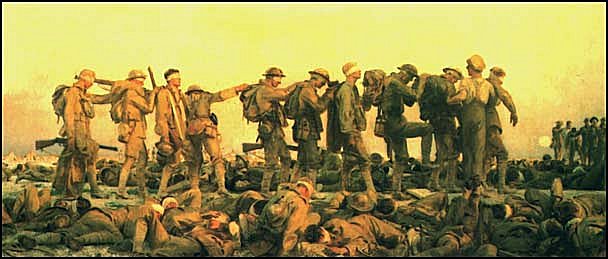
It grows out of Armistice Day, the day the carnage of World War I ended. It ended on the 11th hour of the 11 th day of the 11th month.

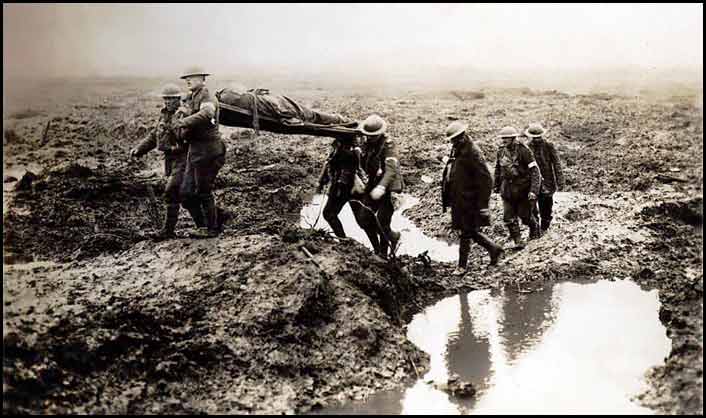
Here's a poem by John McCrae called "In Flanders Field." He was a doctor who wrote the poem in 1915 for a friend who died in the Battle for Flanders Field. The battle lasted 100 days and cost 400,000 Allied and German casualties. The war went on for another 3 years after that, and millions of people died in those years.

Here's McCrae's poem:

In Flanders fields the poppies blow
Between the crosses, row on row,
That mark our place; and in the sky
The larks, still bravely singing, fly
Scarce heard amid the guns below.

We are the Dead. Short days ago
We lived, felt dawn, saw sunset glow,
Loved, and were loved, and now we lie
In Flanders fields.

Take up our quarrel with the foe:
To you from failing hands we throw
The torch; be yours to hold it high.
If ye break faith with us who die
We shall not sleep, though poppies grow
In Flanders fields.


When I told my daughter Lillian that I was going to use the Flanders Field poem, she suggested another poem.

Here's what Lillian wrote:

"Personally, I like the Ode of Remembrance (the 3rd and 4th stanzas of Binyon's "For the Fallen") that they use throughout the "British Empire" at Remembrance Day commemorations. I think Binyon's poem, at least the following two stanzas, is more universal. It could be any war, any century, any side; and I think that is what Remembrance Day is for, remembering every fallen soldier--every kid who is too naive or too idealistic or too stupid or too gullible and so they join up for all of the right and all of the wrong reasons and then they die, painfully and horribly and wastefully, but bravely and nobly."

And here's Binyon's poem:

They went with songs to the battle, they were young,
Straight of limb, true of eye, steady and aglow.
They were staunch to the end against odds uncounted,
They fell with their faces to the foe.

They shall grow not old, as we that are left grow old;
Age shall not weary them, nor the years condemn.
At the going down of the sun and in the morning
We will remember them.

PPS: Let me say just one more thing:

War comes to us, and we weep at our losses and pray for our delivery. And then peace comes and then peace goes, and wars come and come and come.