Showing posts with label Lightning and Ashes. Show all posts

Thursday, February 19, 2015

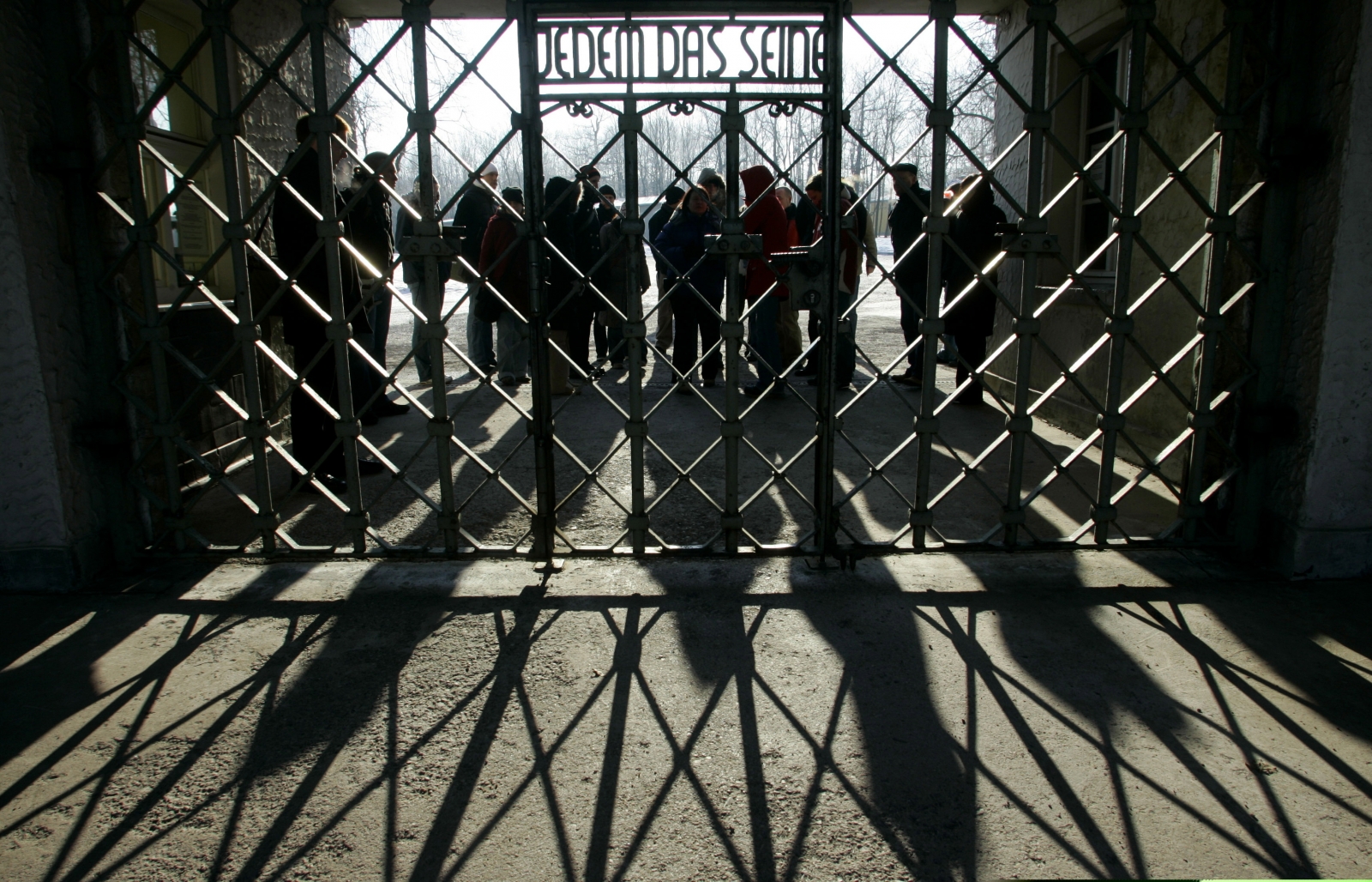
Winter Dreams -- Buchenwald Concentration Camp, 1944


By the winter of 1944, my father had been in Buchenwald for 3 years. 
He thought the war would never end and he would die there, some cold winter morning. I wrote a long sequence of poems about that winter. The sequence is called "Third Winter of War: Buchenwald" and it's in my book Lightning and Ashes.  
Here is one of the poems from that sequence: It's about the nightmares my dad had in the camp. They continued until the day he died 53 years later. Theywere always with him.

XVIII.

He dreams again his hands are cut
to pieces. He dreams he is falling.
He dreams he is an old woman
eating the fingers of a young boy
who died when his horse reared
up crazily and crushed him.
He dreams he swims in a river
he can’t escape. It is the blood
of the devil, thick and dark
and like acid to the tongue.
He dreams of eating human flesh,
of women copulating with corpses,
of dogs licking his fingers,
of soldiers spreading manure
around the red and white roses
beside the church in his village.
He dreams he swims in a river
he can’t escape. It is the blood
of the devil, thick and dark
and like acid to the tongue.

_____________________

The statement on the gate at Buchenwald reads "Jedem Das Seine."  It is German for "To Each His Own."

Friday, June 19, 2009

Happy Father's Day


My father was probably the hardest working man I knew.

When I was a kid he would work double shifts, 16 hour days, and some years he wouldn't take vacations because the bosses at the factory where he worked would pay him double time. They would give him his vacation pay, and they would give him the week's salary on top of that.

Double time. He loved earning double time. He'd laugh and say it was one of the best things about America. Like getting something for nothing.

When he wasn't working at the factory, he was working around the house. Five years after coming to America, my parents bought a five-unit apartment building. Nine years after coming to America, they sold that one and bought a six unit on Evergreen Street in Chicago. My dad--and my mom--were always working on these buildings to maintain them and spruce them up. They plastered ceilings, painted walls, and stripped and varnished floors. When he wasn't doing that kind of work, he would be outside chopping wood to feed the massive furnace we had in the basement, or he'd be in one of the apartments with his pliers and hammer working on a leak. He didn't know a thing about pipes, but he was sure that sweat and hard work could fix them.

He was always like this.

Toward the end of his life when he was dying of cancer, he was still hauling new orange trees -- with their roots bundled up in burlap -- into the back yard and trying to plant them. Sometimes he just couldn't do it, didn't have the strength to stand up, and he would ask me to help. He'd sit on a chair in the backyard, trying to breathe and pointing to a spot where he had lugged the orange tree.

"Plant it there, Johnny," he'd say in Polish. "Plant it there."

Sometimes, he'd have so little breath that the words would be a whisper. You know what I mean.

Here's a poem about my dad and why he worked so hard. It's part of a sequence of poems about his working that appears in my book about him and my mom, Lightning and Ashes:

From "Looking for Work in America"

What My Father Brought With Him


He knew death the way a blind man
knows his mother’s voice. He had walked
through villages in Poland and Germany

where only the old were left to search
for oats in the fields or beg the soldiers
for a cup of milk. He knew the dead,

the way they smelled and their dark full faces,
the clack of their teeth when they were desperate
to tell you of their lives. Once he watched

a woman in the moments before she died
take a stick and try to write her name
in the mud where she lay. He’d buried

children too, and he knew he could do any kind
of work a man could ask him to do.
He knew there was only work or death.

He could dig up beets and drag fallen trees
without bread or hope. The war taught him how.
He came to the States with this and his tools,

hands that had worked bricks and frozen mud
and knew the language the shit bosses spoke.

__

Wednesday, April 9, 2008

KATYN: The Forest of the Dead

April is the month when many of the killings at Katyn Forest took place during World War II. Poles try to remember this every year, and I've been thinking about Katyn recently. I've been thinking about Katyn and my father.

When I was a child, he told me a lot of stories about what happened in the war, about things that happened to my mother's family and his family and to Poland. One of the stories that he came back to repeatedly was about what happened in the Katyn Forest near the Russian town of Smolensk in 1940.
.
He told me about how the Soviets took 15,000-20,000 Polish Army officers and killed them. Nobody knows the number for certain.
.
My father used to say, "It's hard to count bones."
.
These soldiers were mainly reservists; that means they weren't professional soldiers, just civilian soldiers. In their daily lives, they were doctors and lawyers, teachers and priests. My father used to say that they were the future of Poland. He said that the Soviets didn't want Poland to have a future, so they took these doctors and lawyers, scientists and librarians and tied them up and blindfolded them and shot them in the back of the head. They were buried in mass graves.

One of the things he also told me was that people knew about this, countries likes the US and England knew about this, and nobody did anything about it. The Soviets, of course, denied it, and so did other countries. They didn't want to bring it up. I guess they figured what was the point of talking about massacres and genocide.
.
My father never wanted me to forget about Katyn.
Years ago, I wrote a poem about it for my book Echoes of Tattered Tongues, and I want to share the poem with you on this anniversary of the Katyn Massacre.
KATYN

There are no Great Walls there,
No towers leaning or not leaning
Declaring some king's success
Or mocking another's failure,
No gleaming cathedral where you can
Pray for forgiveness or watch
The cycle of shadows play
Through the coolness of the day,

And soon not even the names
Of those who died will be remembered
(Names like Skrzypinski, Chmura,
Or Anthony Milczarek).
Their harsh voices and tearing courage
Are already lost in the wind,
.
But their true monuments
Will always be there, in the dust
And the gray ashes and the mounds
Settling over the bodies over which
No prayers were ever whispered,
No tears shed by a grieving mother
Or a trembling sister.


______________________________________
.

Here's a trailer for the Oscar-nominated film KATYN by Andrej Wajda.

.

Wednesday, December 26, 2007

What My Father Believed

Garrison Keillor's reading of my poem "What My Father Believed" from my book Lightning and Ashes is now available at the following link:

http://writersalmanac.publicradio.org/programs/2007/12/24/#friday

The poem talks about my father's faith, how he learned about God in Poland as a child, and how his faith sustained him in the concentration camps in Nazi Germany.