Friday, May 27, 2022

THIS IS NOT NORMAL

 THIS IS NOT NORMAL

My daughter Lillian is an elementary school principal.  She wrote something a couple days ago in response to the school shooting in Texas that left 19 children and 2 teachers dead. The piece was published today in the Polish Daily News in Chicago.

Here's what she wrote:

I’ve been in public education for 18 years. Ten years as a high school English teacher and eight years as an administrator. I am currently finishing my second year as an elementary school principal. I’ve been in lockdowns and lockdown drills.

I’ve had to plan what I would do in my classroom to protect myself and my students. My last year teaching, I had a couple of filing cabinets which probably seemed awkwardly placed to the casual visitor, but which I had put there deliberately to create a blind corner you couldn’t see from the door or the windows. I also figured the thick metal and folders stuffed with exams and essays could help slow bullets. I was hoping to save my students by offering their drafts of college application essays as collateral damage.

As an administrator, I’ve had to plan for the worst case scenario. I’ve locked my buildings down. I’ve searched for weapons and bombs. I’ve worked on reunification plans. I’ve planned which classrooms and hallways would be for relieved parents and which for those who will never see their children alive again. I’ve had to remind my colleagues that if the worst happens we can’t expect all our faculty/staff to be able to help. Some of them will have their own children to search for.

I’m also a mom. My daughter is in middle school. She has grown up with lockdown drills. When she used to play school with her dolls and stuffies, practicing lockdowns was part of the lesson. Now that she is older, she knows that her phone has to be fully charged when she goes to school—it has to be on do not disturb, but it can never be turned off in case I need to find her. In case something happens.

There are lots of things I should worry about when I send my daughter to school in the morning—who she’ll sit with at lunch, whether she’ll do a good job on a presentation, whether she’ll get the part she wants in the school play. I shouldn’t have to worry about whether someone will enter her classroom and shoot at her or her friends. The parents who send their children to my school shouldn’t have to worry about whether or not their children will come home. My teachers shouldn’t have to worry about whether today will be the day they have to die shielding their students from a shooter.

Something has to change. We have to change. We can’t keep acting like this is normal.

https://dziennikzwiazkowy.com/felietony2/to-nie-jest-normalne-this-is-not-normal/

.

Friday, May 20, 2022

WHAT THE SISTERS TAUGHT ME

WHAT THE SISTERS TAUGHT US


I received a letter recently from a fellow who frequently reads my columns in the Dziennik Zwiazkowy.  He was disappointed in some of my recent columns, especially the one defending Art Spiegelman’s Maus, a book about the Holocaust.  This reader thought my article was a waste of time and simply opened up a lot of unhealed wounds.  He suggested instead that I should write articles about Catholic schools in Chicago.  He feels they are losing students because they are under attack by atheism, LGBT culture, and the forces of Anti-Catholicism in America.

My first response to the letter was to just ignore it, but then I started thinking about how much going to a Catholic school changed my life.  

I started at St. Fidelis, a parochial school in Chicago, in 1954 when I was 6 years old.  I was a refugee and could barely speak English then.  The sisters at that school pretty much made me the person I am.  They prepared me to be the university professor I was for 35 years and the poet and novelist I am today.  Without my Catholic schooling by the nuns at St. Fidelis, I don’t know what I would have become.  

Thinking about all of this, I thought about the other students at St. Fidelis and how the sisters changed their lives.  I’m in a Facebook group devoted to St. Fidelis.  There are about 500 former students in the group, and I asked them what they learned from the sisters.  

Here’s what the other students who attended St. Fidelis told me.

Probably the most important lessons were in the area of basic skills: reading, writing, and mathematics.  Reading and writing were primary.  I felt that way myself.  I came from a working-class home where my parents had very little experience with either reading or writing, but by the time I was in second grade I had my own library card and was a frequent visitor at the Humboldt Branch of the Chicago Public Library.  The nuns were also committed to make us math champs.  Some of the former students talked about playing Baseball Math, a blackboard competition to see who could answer math questions the fastest.  I remembered Sister Xavier expecting us to define math terms as fast as we could.  She would shout out words like “minuend” and “subtrahend”  and expect us to shout back the definition without hesitation.  

These basic skills were supposed to prepare us for high school, and they did. Many of us found ourselves in college preparatory classes in high schools.

Today, looking back on all this, it seems remarkable. A number of students at the school were first generation Polish Americans or Displaced Persons who had come over from refugee camps after the war.  We were the children of moms and dads who spoke little or no English, and still we were transformed by the sisters at St. Fidelis into people who became college professors and doctors and medical researchers and scientists and army officers and journalists and writers.

Thanks to those sisters.

https://dziennikzwiazkowy.com/felietony2/czego-nauczyly-nas-zakonnice/

-

Friday, April 29, 2022

The War Goes On

THE WAR GOES ON 

Like you, I’m tired of hearing about Putin’s war against Ukraine.  It started two months ago on Monday, February 21, and everyone was sure that it would be over within a few days. Russia seemed unstoppable, a major world power with unlimited ability to destroy and kill, and Ukraine seemed ill-prepared and in a daze.  We all expected the war to be over by that weekend.

But the war didn’t stop, and there doesn’t seem any sign that it will stop any time soon.

Everyday, I open the paper and turn on the news and go on social media, and I hear about the Russian forces advancing here and pulling back there.  I hear about the Ukrainians doing the unbelievable, standing up to the Russians and pushing them back slowly to the borders of their country.  I hear about the Polish government issuing a 36-page guide telling Poles how they should prepare for a possible invasion of Poland and – what’s worse – a possible nuclear attack.

And I hear more than that.  I hear the news that I don’t want to hear.  I hear about the misery this war has caused for the Ukrainians. 

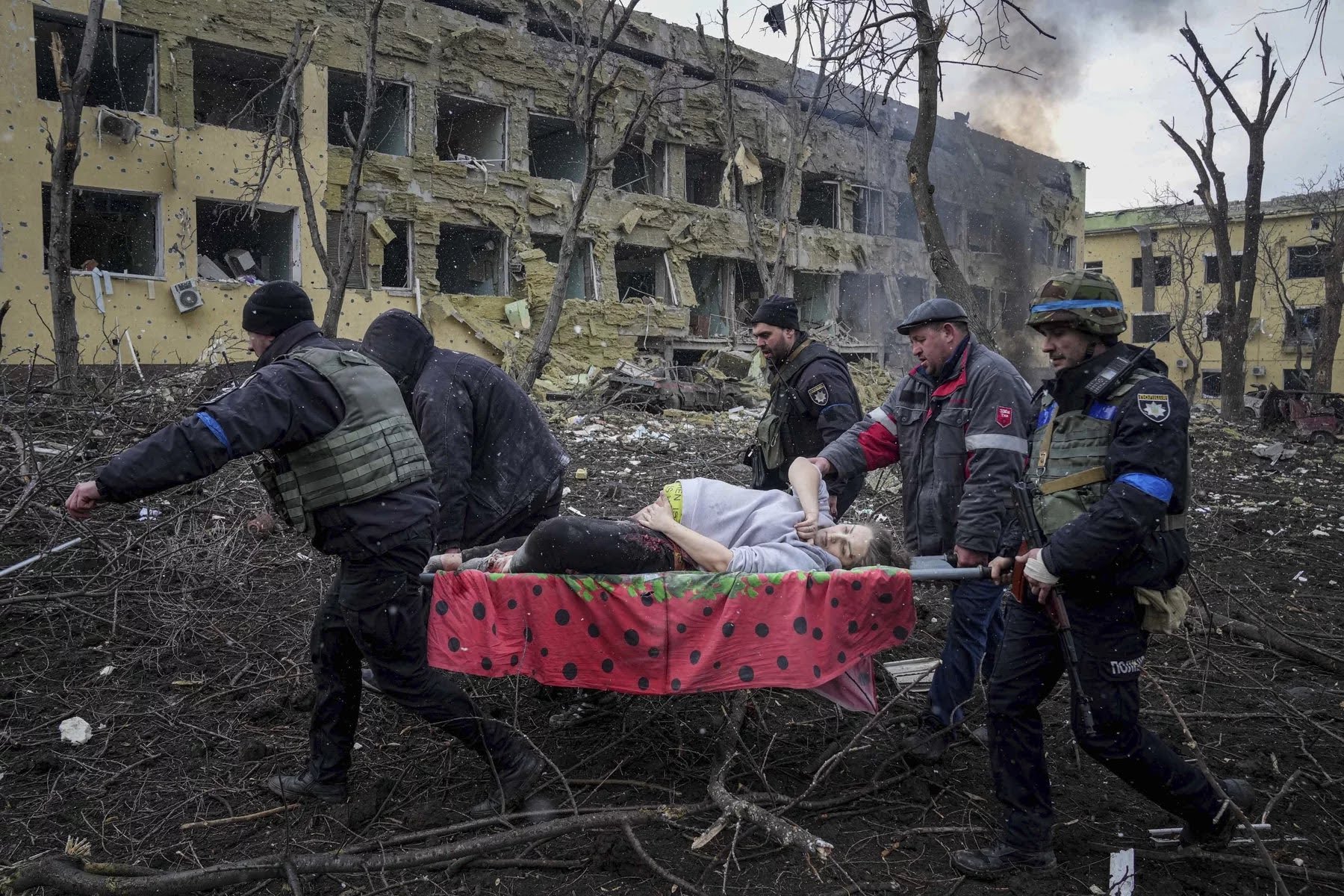
I hear about the buildings destroyed in Lviv and Mariupol and Kyiv and little towns no one outside of Ukraine has ever heard of.  I see footage of mothers carrying their babies through the rubble of destroyed streets, of grandmothers sitting in those streets weeping, of fathers pushing their struggling children into buses that will hopefully save them by taking them to Katowice or Lublin. 

I hear all of this, and I wonder what the people of Russia are thinking.  Are they being lied to by their government?  Are they being told there is no war?  That the Russian soldiers in Ukraine are simply on an extended picnic, and they will be back in their home towns before the first rose blooms this summer.  Or do the Russian people know the truth that there nation is a nation of murderers and rapist and killers of children and their moms and dads and grandparents. 

And I know that this war will not end even when it ends.   

For those that have been in a war, suffered its brutality, endured its grief or succumbed to that grief, war does not end.    

I know this because I saw it in my parents.  They were teenagers when the Germans invaded Poland and did the terrible things to the country and to my mother and father that they did, brutalizing and killing their families and sending them to the slave labor camps in Germany.  

My parents lived with these memories of the war all their lives.  There was never a day that they didn’t carry the psychological wounds of the war with them.  Fifty years after the war, the pain of the terrible things they experienced and saw was still with them.

And it will be like this for the Ukrainians and for those of us watching this war.

My latest column for the Dziennik Zwiazkowy, the oldest Polish newspaper in America. 

https://dziennikzwiazkowy.com/felietony2/wojna-toczy-sie-nadal-the-war-goes-on/


.

Friday, March 25, 2022

WAR IS HELL


WAR IS HELL

You’ve probably heard that quote before a million times. You’ve probably been hearing it a lot recently on the news and from your friends because of the terrible things that the Russians are doing to mothers and fathers and children in the Ukraine.

The quote comes from William T. Sherman.  He was a general in the Union Army during the American Civil War, and he knew what he was talking about.  He commanded soldiers in some of the bloodiest conflicts in that war.  He saw soldiers and civilians die in Kentucky, Tennessee, Mississippi, Alabama, and North and South Carolinas.  The worst of the killing was probably in Georgia where he and the Union Army followed a “scorched earth” policy that resulted in the destruction of everything from Atlanta to Savannah.  As he marched to the sea, he destroyed military bases, industrial facilities, and civilian property.  

Let me give you another quote from Sherman: “War is cruelty.”

I’ve been thinking a lot about Sherman’s quotes recently. 

Starting in the morning and throughout the day, I watch the news about the war in Ukraine.  I see the people running from explosions.  I see hospitals and schools and hotels being blown up. I see masses of refugees in train stations struggling to find some way out of the hell that Ukraine has become.  I see mothers frightened, children weeping, fathers looking lost and hopeless.  I see them being killed too. 

War is hell and cruelty.

I watch this on the news and hear about it from my friends, and then I turn back to the things I usually do.  I have toast and cereal for breakfast, I step out into the garden and do some wedding, I go to the supermarket to buy some groceries that I’ll need for tomorrow and the day after. My life continues as it always does.  Putin’s war against Ukraine is just a momentary pause in my day.  Mostly I feel there’s nothing I can do about the terror and the destruction and the cruelty and the hell that the Russians have unleashed on the mother and fathers and children of Ukraine.

The war is constant for those people, and from what I know about how the invasion of Poland by Germany and the Russians affected my parents and the millions of Poles who survived that war, that suffering will never end.

War is hell for the victims of war.  For the rest of us who watch it on TV, it’s just a pause in our regular routines.  

We can talk about how terrible all this killing is.  We can send donations to Doctors Without Borders and the Red Cross.  We can write to our government representatives to do something to stop this war.  We can pray for all this killing to end.

But none of that is enough.  

Nothing is enough. 

War is hell and cruelty.


— my latest column for the Dziennik Zwiazkowy, the oldest Polish newspaper in America.


https://dziennikzwiazkowy.com/felietony2/wojna-to-pieklo-war-is-hell/

.

Monday, March 21, 2022

Pre-Post-Apocalyptic Blues

 Pre-Post-Apocalyptic Blues

Watching the news recently about Putin’s war against Ukraine,I can’t help feeling that we are all fascinated with the idea that the world may come to an end.  

This is nothing new, of course.  If you turn on your TV, you can binge any number of TV series about the end of the world.  It started with Walking Dead (2010) and continues through TV shows like The Last Ship, The Strain, Under the Dome, Extant, The Rain, Daybreak, Z Nation, Black Summer, Falling Skies, and so many, many more.  In fact, in preparing to write this column for the Polish Daily News, I googled “Best Apocalyptic TV series” and found a site that lists and describes the 100 best apocalyptic series.  I’m sure there’s another site that lists the 100 worst apocalyptic series.

And there doesn’t seem to be an end to these shows about the end of the world.  In fact, I’m really looking forward to HBO’s The Plot Against America, about American Alt-Right guys led by pro-Nazi Charles Lindbergh trying to take over the land of the free and the home of the brave in the early 1940s. 

Watching these series, you see the world brought to an end by zombies, vampires, meteors, alien invasions, and diseases like the coronavirus.

And God maybe.

I just started watching Leftovers -- the HBO series about what the world is like after what appears to be the Rapture happens and Jesus comes back to earth to take the really holy to heaven while leaving you and me behind.

It’s not pretty.  God doesn't take prisoners.

 Of course, all of this gets me wondering why this fascination with the end of things?  Is it because the world suddenly feels really old, and when you get to feel really old you start thinking about how things will end?

Or maybe it's because the world has ended -- virtually.  We spend so much time inside our homes watching the World Come to An End on TV that we don't realize that there's a real world still out there, the one outside my window, a world free of zombies and dogs and cars -- and people.

Hmmm.  It suddenly occurred to me that nobody has passed my house in the last 30 minutes or so.  No walkers or runners, no drivers driving cars or trucks.  Nobody.

Has the world ended while I was writing this column?

I better turn on the TV and see if there's anything left.

——-


A slightly different version of this article appeared originally in the Dziennik Zwiazkowy, the oldest Polish Daily in America, founded in 1908

Friday, March 4, 2022

War and Peace

War and Peace

We’ve all been following the Russian invasion of Ukraine. My 12 year-old granddaughter is following it, and my 97 year-old mother-in-law is following, and my best friend Bob who hasn’t followed the news since 1963 is following it. On the news this morning, I was told that even though only a third of Americans know where Ukraine is, 77% are anxiously following the war.

We all know the cause of the anxiety. We’re anxious that the Russian invasion will escalate into World War III.

This war started last week, and there doesn’t seem to be a quick stop to it coming up. I’m writing this column on Monday, February 28, and I just heard Belarus is preparing to send troops into Ukraine to support the Russians. Belarus also just issued a warning that all of this fighting may lead to World War III.

Hearing that, my anxiety grows as I’m sure yours does.

I was surprised, therefore, this morning when a friend sent me a copy of Polish Nobel Laureate Wislawa Szymborska’s poem “The End and the Beginning.” I love her writing, and I very much admire this poem, but I feel its optimism doesn’t fully express what happens when a war ends. When I first read her poem, I sat down and wrote “War and Peace.”

Here is her poem. My response follows. I’ll let you judge which poem gives a more accurate sense of what happens when wars end.

Wisława Szymborska

THE END AND THE BEGINNING

After every war

someone has to clean up.

Things won’t

straighten themselves up, after all.


Someone has to push the rubble

to the side of the road,

so the corpse-filled wagons

can pass.


Someone has to get mired

in scum and ashes,

sofa springs,

splintered glass,

and bloody rags.


Someone has to drag in a girder

to prop up a wall.

Someone has to glaze a window,

rehang a door.


Photogenic it’s not,

and takes years.

All the cameras have left

for another war.


We’ll need the bridges back,

and new railway stations.

Sleeves will go ragged

from rolling them up.

Someone, broom in hand,

still recalls the way it was.

Someone else listens

and nods with unsevered head.

But already there are those nearby

starting to mill about

who will find it dull.


From out of the bushes

sometimes someone still unearths

rusted-out arguments

and carries them to the garbage pile.


Those who knew

what was going on here

must make way for

those who know little.

And less than little.

And finally as little as nothing.


In the grass that has overgrown

causes and effects,

someone must be stretched out

blade of grass in his mouth

gazing at the clouds.


John Guzlowski

WAR AND PEACE


War will kill you

and leave you

cold in the street

or in the fields,

broken in the rubble

of bombed buildings


But don’t worry:

peace will come

and bury you

and sit over you

weeping like your mother,

praying for you,

pleading for your return


She’ll whisper to you

like when you were

a boy in the stream

washing your hands and face

before breakfast


She will weep until

God brings a miracle:

you risen again

in golden rays

and singing birds


and then war

will return

and kill you

——

My latest column for the Dziennik Zwiazkowy, the oldest Polish newspaper in America. 


https://dziennikzwiazkowy.com/felietony2/wojna-i-pokoj-war-and-peace/


.

Friday, February 18, 2022

Maus and Me


 Maus and Me

You’ve probably been hearing a lot about Art Spiegelman’s book Maus recently.  His graphic memoir about the Holocaust was banned in Tennessee, and as a result, many of my Polish and Polish American friends on social media have been talking about it.

I’ve been a fan of Spiegelman’s Maus for a long time.  I first read this memoir about his father and his experiences in the Holocaust in 1990.  

My  connection with the book was almost instantaneous. Spiegelman and I shared so much. We both loved comic books for one thing. My great dream growing up was to write and draw comic books.  The dream never came true for me, but it became true for Spiegelman.  His graphic novel (i.e.  comic book) was the only one to ever win a Pulitzer Prize.  Another thing that connected us was that we both had Polish parents who were victims of the Germans.  My Catholic parents were sent to concentration and slave labor camps in Germany.  His Jewish parents went to Auschwitz. They all survived the war.  Finally, Art Spiegelman and I both wrote about our parents and the horrors they went through.  He wrote Maus and I wrote Echoes of Tattered Tongues: Memory Unfolded. Like I said, I like Maus very much, and when I was still teaching I used to teach the book as often as I could.  

The Tennessee ban on Spiegelman’s book is pretty ridiculous.  The school board banned it – not for it’s portrayal of the Holocaust – but for its use of curse words and some nudity. 

What surprised me more was the reaction on social media.  Many Poles and Polish Americans attacked Maus for what they felt was its negative portrayal of Poles during World War II and the Holocaust. In the book people of different nationalities are seen as different animals.  Jews are mice, Poles are depicted as pigs, Germans as cats, etc.   That Poles are pigs is offensive to some readers, but the biggest complaint I hear is that the Poles are depicted as bad.

Are there negative portrayals of Poles in Spiegelman’s Maus?  Yes, there are.  For example, some Poles prisoners are seen assisting the Germans in Auschwitz, some Poles are seen betraying Jews, and some Poles are said to have killed Jews during the war.  

Is the portrayal of Poles entirely negative?  No.  Poles are also seen warning Jews that Germans are coming, Poles are seen being threatened by the Germans, Poles are seen treating Jews they know like family.  

What finally are we to make of this?

For me, it seems clear.  War and its chaos and infinite deaths creates a situation like nothing we have ever imagined.  Some of us – whether Polish or Jewish or German – turn against others, and some of us don’t.  

My mother spent 3 years in a slave labor camp.  She survived because one of the Germans guards at the camp took pity on her.  My mother used to say there were good Germans and bad Germans, and she forgave the good ones.  

For me, this is one of the lessons of Spiegelman’s Maus.  Forgive the good people.

——

My latest column for the Dziennik Zwiazkowy,  the oldest Polish newspaper in America.