Showing posts with label Buchenwald. Show all posts

Tuesday, April 10, 2018

The Liberation of Buchenwald Concentration Camp, April 11, 1945


On April 11, 1945, American troops liberated Buchnewald Concentration Camp.  It was a large camp housing about 80,000 prisoners, Poles, Slovenians, Frenchmen, Africans, and others.  They were brought there to work in the factories that the Germans built in and around the camp. 

We have a lot of documentation and photos from this liberation because the great American journalist and photographer Margaret Bourke-White was with the US Army when they liberated this camp.  She took photographs that captured the suffering of the men who were in the camp.

Here’s one of her photos.


My father was a prisoner in this camp for four years.  He was just a Polish farm boy, and he was captured when he went into his village to buy a piece of rope one Saturday.  The Germans had surrounded the village and were rounding up men and boys to go to Buchenwald and work in the factories there.

A lot of times when we think of Concentration Camps we imagine the death camps the Germans built in Poland where the primary business was killing large numbers of civilians.  Buchenwald wasn’t a death camp.  Millions did not die there, burned in the ovens, their ashes scattered in ponds where the water is still gray 70 years later.  But they did die there.  About one out four people died each year. 

What did they die of in Buchenwald?

Mainly starvation.  Fifty years later, my dad could still remember the hunger he felt.  He did hard labor 6 and even 7 days a week, 12 and 14 hour days, on a handful of food a day.  I’ve read accounts of what the men ate.  It came to about 600 calories a day. How much is that?  A Big Mac with Cheese is about 700 calories.  A Big Mac without cheese is 600.  But what my dad ate wasn’t a Big Mac.

I asked my dad once how he was able to stay alive.  He shrugged and said he didn’t know.  He said that most of the time the guards gave them a kind of gray gruel made out of some kind of grain and animal bones.  My dad called it “Hitler’s secret weapon.”  It wasn’t enough to keep a man alive, so my dad was always looking for things to stick into his mouth: twigs, pieces of paper, bits of cloth, leather buttons.  Once when he complained about the food, a guard hit him across his head with a club.  He knocked my dad down to the ground, but my dad got up and begged for food.  It was the wrong thing to say.  The guard clubbed my dad unconscious.  When my dad awoke, he was blind in one eye. 

But men didn’t only die of hunger.  People died for simple infractions, annoying the guards by urinating out of turn, slouching in line, standing in the wrong place. 

They died of cruelty too.  My father told me a story about one cold January night when the 400 men in his barracks were called out into the square for a roll call.  The men were dressed in rags, torn pants and shirts.  Some had shoes, others didn’t.  They had almost no protection from the snow and wind.  The guards lined them up in rows and told them they had to check the roster of prisoners, and then the Germans started reading the long lists of names.  As the guards read, men started dropping into the snow, falling to their knees and then keeling over.  And the guards kept reading.  They read through the roster once and then they said, “Oops, we missed a name,” and then they read through the roster again and again and again for six hours while men fell to their knees and died in the snow.  The next morning garbage carts came and collected the dead and took them to the ovens.  

Others died from overwork, hangings, experiments, crucifixions.  One of my father’s friends, an artist from Wilno, was first castrated and then hanged. 

One in every four died like this.  A lot of Margaret Bourke-White’s photos are of the dead, in piles like worthless paper, like rubbish.

But there are also many pictures of those who survived.

And when I look at the photos Margaret Bourke-White took the day the camp was liberated, I look for the face of my dad.  Thin as a shoelace, blind in one eye, with a scar across his skull where the guard beat him and beat him and beat him.  I haven’t found my dad yet, but I know I’ll recognize him when I see him.  

In the Spring the War Ended


For a long time the war was not in the camps.
My father worked in the fields and listened
to the wind moving the grain, or a guard
shouting a command far off, or a man dying.

But in the fall, my father heard the rumbling
whisper of American planes, so high, like
angels, cutting through the sky, a thunder
even God in Heaven would have to listen to.

At last, one spring day he knew the war was there.
In the door of the barracks stood a soldier,
an American, short like a boy and frightened,
and my father marveled at the miracle of his youth

and took his hands and embraced him and told him
he loved him and his mother and father,
and he would pray for all his children

and even forgive him the sin of taking so long.

__________________________________________

The photo above was taken by Margaret Bourke-White.

If you want to know more about my dad and his experiences in the war, you can get a copy of my book Echoes of Tattered Tongues, available at Amazon.  Echoes contains the chapbook Third Winter of War: Buchenwald, about my dad's experiences in that camp.

Thursday, February 19, 2015

Winter Dreams -- Buchenwald Concentration Camp, 1944


By the winter of 1944, my father had been in Buchenwald for 3 years. 
He thought the war would never end and he would die there, some cold winter morning. I wrote a long sequence of poems about that winter. The sequence is called "Third Winter of War: Buchenwald" and it's in my book Lightning and Ashes.  
Here is one of the poems from that sequence: It's about the nightmares my dad had in the camp. They continued until the day he died 53 years later. Theywere always with him.

XVIII.

He dreams again his hands are cut
to pieces. He dreams he is falling.
He dreams he is an old woman
eating the fingers of a young boy
who died when his horse reared
up crazily and crushed him.
He dreams he swims in a river
he can’t escape. It is the blood
of the devil, thick and dark
and like acid to the tongue.
He dreams of eating human flesh,
of women copulating with corpses,
of dogs licking his fingers,
of soldiers spreading manure
around the red and white roses
beside the church in his village.
He dreams he swims in a river
he can’t escape. It is the blood
of the devil, thick and dark
and like acid to the tongue.

_____________________

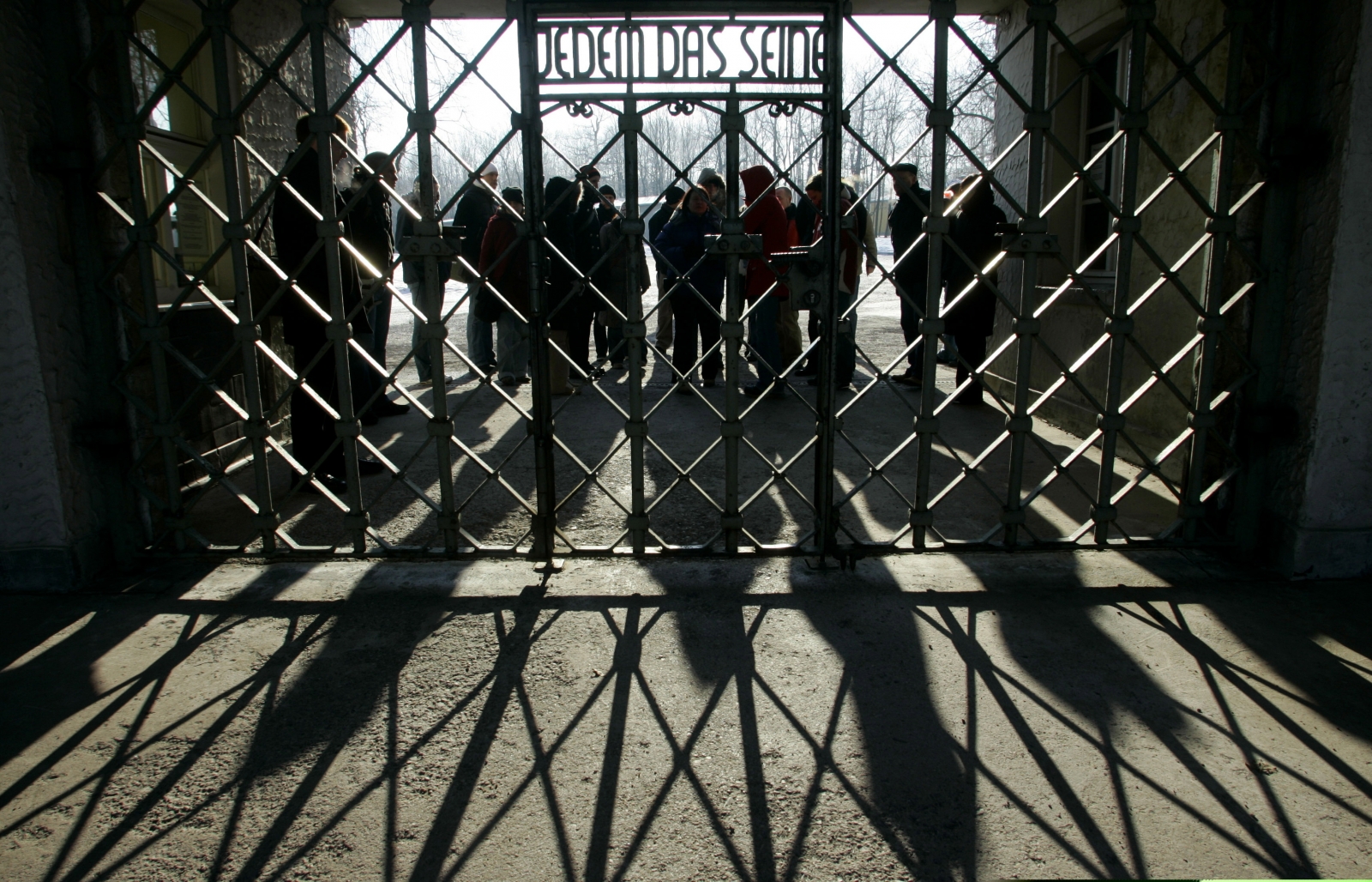
The statement on the gate at Buchenwald reads "Jedem Das Seine."  It is German for "To Each His Own."

Tuesday, October 28, 2014

My Mother's Dreams in Wartime


My Mother's Dreams in Wartime

The world burns before our eyes,
and the smell of everything red
is on our skin.
We wait in line for bread
that never comes. We speak
to strangers thinking they will
tell us where our lives are.
We pray in the barracks
and the fields for the miracle
of hope.

____________________________

My mother survived more than 2 years in various labor and concentration camps in Germany.  She never thought she would.

Much of the writing in my book Echoes of Tattered Tongues describe her struggle to keep going.  


Friday, April 13, 2012

67th Anniversary of the Liberation of Buchenwald


April 11 was the 67th anniversary of the liberation of Buchenwald Concentration Camp.

My dad spent four and a half years there.  He was a farm kid living in Poland when he was captured by the Germans.  In the camp my father learned a lot of things, but one lesson stayed with him always.  As he used to say, “There is only work and death.” 

When he was liberated in the spring of 1945, he was dressed in rags, weighed about 75 pounds, and  only had one eye.  He had lost the other when a guard repeatedly clubbed him for complaining about the food.  

Here’s a poem I wrote about the day my father was liberated by the Americans.  It comes from Lightning and Ashes, my book about the experiences of both my parents in the German slave labor and concentration camps.

In the Spring the War Ended

For a long time the war was not in the camps.
My father worked in the fields and listened
to the wind moving the grain, or a guard
shouting a command far off, or a man dying.

But in the fall, my father heard the rumbling
whisper of American planes, so high, like
angels, cutting through the sky, a thunder
even God in Heaven would have to listen to.

At last, one spring day he knew the war was there.
In the door of the barracks stood a soldier,
an American, short like a boy and frightened,
and my father marveled at the miracle of his youth

and took his hands and embraced him and told him
he loved him and his mother and father,
and he would pray for all his children
and even forgive him the sin of taking so long.

____________________

My wife's Uncle Buddy Calendrillo was with Gen. Patton's army when they liberated the camps.  I've written about him and what liberating the camps meant to him.  You can read that post by clicking here.

The photo above was taken by Margaret Bourke-White, an American photographer who was one of the first reporters in the camps. She wrote a great book about her experiences called Dear Fatherland, Rest Quietly: A Report on the Collapse of Hitler's Thousand Years.


Sunday, December 7, 2008

Buchenwald: The Work He Did

 
Posted by Picasa


When my father was dying of liver cancer, the doctors popped him full of morphine, enough morphine -- they thought -- to keep him drifting peacefully toward his death, but the morphine wasn't enough. Nothing was enough to make him forget what it was like in the concentration camp at Buchenwald. He had spent 4 years there, a place where every year one out of every four of the prisoners was worked to death.

Dying and drugged up in 1997, he was back in the camps, starving and struggling to keep alive. He was convinced that the doctors and nurses were Nazi guards. He was also sure that my mother and I had betrayed him to the guards. There was nothing we could say to make him realize the war was over and he wasn't working in the camp and that there was no reason to be afraid.

He was still afraid.

Let me tell you one of the stories he told me about working in Buchenwald:

I lifted the shovel, saw the dirt, the clods still heavy with snow, and I knew that this would always be my life, one shovel and then another shovel until my arms were shaking. I never knew what the guards would say to me.

Maybe they’d ask me for a song, one of the songs I knew in Poland that I sang when I was a boy leading the steaming cows into the woods early in the spring. And I would smile and sing, and then I would ask the guards if they’d like another song.

Or maybe they would tell me I was a fool and my mother was the kind of pig the farm boys fucked when their own hands were weak from pulling on their sore meat.

And I would shovel in terror and think of the words I would not say but wanted to say:

Sirs, we are all brothers, and if this war ever ends, please, never tell your children what you’ve done to me today.

____


(You can read a version of this story and other stories about the work my father and mother did in Germany in my book Echoes of Tattered Tongues.)

Thursday, January 24, 2008

A Letter from Uncle Buddy

I got a letter from Linda's Uncle Buddy.
.
For Christmas, Linda's dad Tony gave his brother Buddy a copy of Third Winter of War: Buchenwald, my book about my dad, and Uncle Buddy wanted to tell me about it.
.
The letter means a lot to me, and you'll see why when you read it.
.
Here's his letter:

Dear John,

I read the poems you wrote. I found them very moving. I'm no whiz kid about understanding every line you wrote but I could feel the sadness, the hurt, and the agony in your poems. I hope when people read these poems they will realize how these people in the camps suffered and how they were tortured.

I guess I feel it more because I saw it. It took me 50 years to talk about it. I still think about it, and my nightmares that come and go.

The camp we took back in April 4, 1945 was a sub-station to Buchenwald. It was called Ohrdruf.

Be well, our love to you and Linda and Lillian

Uncle Buddy

PS. Don't ever stop writing.
______________________________________________________________


That was the letter, and as I said, it means a lot to me.

I knew Buddy had helped liberate the concentration camp at Ohrdruf. A couple years ago a video came out called Nightmare's End: The Liberation of the Camps. It's a powerful documentary about the soldiers who freed the camps.


When I was still teaching, I would sometimes show this film in my American Lit class when we were talking about the literature of the World War II period. The response would pretty much be the same every time I showed it. I would roll the video tape and turn off the lights. The film would come on. First, there would be silence. Then there would be weeping. At the end of the film, I wouldn't turn the lights back on right away because I knew that students wanted some time alone with their thoughts and emotions.

I saw this documentary maybe a dozen time, and it always moved me. And what always moved me most was watching Uncle Buddy and listening to him.

In the documentary, he's being interviewed by a person who's off camera. All we see is Uncle Buddy, and he just starts talking about going into the camp, and what you realize immediately is that his memories of that day he came to Ohrdruf, April 4, 1945, are as new and intense as they were then. He was in his late teens when he came upon the camp, and in the video he's in his late 70s. Fifty years have gone by and the memories are still new, still intense. What he saw will never leave him. It will always be there.

He can barely talk about what he remembers seeing, but he forces himself to go on and what he says about the prisoners in that concentration camp is simple and human and profound: "They were just people."

Thanks, Uncle Buddy.

Thursday, December 20, 2007

Christmas and Forgiveness

I recently gave a talk about my parents and their experiences with the Nazis to Narci Drossos’s class at Valdosta High School in Georgia. I talked about my father who spent 4 years in Buchenwald and other camps around Buchenwald, and I talked about my mother who spent 2 and half years in various slave labor camps in Germany.

During the discussion after my talk, a young man asked me a question. I’m sure it was in part sparked by the Christmas season, the talk that you hear at this time of year about “Peace on Earth and Good Will to all Men.” He asked me whether or not I forgave the Germans for what they did to my parents.

The question stopped me. I haven’t thought about it before.

Of course, I had thought about whether or not my parents forgave the Germans. My father never met a guard he would forgive. They were brutal men who beat him and killed his friends for no reason. One sub-zero winter night, these guards ran roll calls over and over. Hundreds of prisoners in pajama thin clothes stood outside in the cold and snow. By morning, about a hundred prisoners were dead.

He felt anger toward all the Germans.
.
My mother seldom talked about her experiences during the war. If you asked her what they were like, most of the time she would just say, "If they give you bread, you eat it. If they beat you, you run away."

A lot of people say, forget it; it was all a long time ago. For my parents, it was never a long time ago.
.
My parents carried the pain and nightmares with them every day.

When my father was dying in a hospice, there were times when he was sure that the doctors and the nurses were the guards who beat him when he was a prisoner in the concentration camp. There were also times when he couldn’t recognize me. He looked at me and was frightened, as if I were one of the guards.

I don’t think he ever forgave the guards for what they did to him.
.

I remember asking my mom once toward the end of her life if she forgave the Germans. She thought for a while. I’m sure she was thinking about her mother and her sister and her sister’s baby. They were killed by Germans who came to her farm house in eastern Poland. My mother saw this and escaped, at least for a while, by jumping through a broken window and making her way to a forest.

What my mother finally said surprised me. I thought she was going to say what I had heard my father say over and over that all the Germans were evil. But that’s not what she said. She told me a story about when she first was brought to Germany. She was taken to a camp where they worked the women just like they were men, making the women work sixteen, eighteen, twenty hour shifts, six days a week. She said that she knew she couldn’t survive that for long, maybe a week, maybe two.

She was saved by a German, a guard in a concentration camp.

For some reason, this German guard took pity on her. Who knows what his motives were? My mother often said that Germans thought she looked like a German, a niemka in Polish. Maybe this was what got her saved. Maybe not. Whatever it was that motivated this guard, he succeeded in getting her transferred to a different work area where the work was not killing work. She survived the war.

After telling me this story, she said, “Some Germans were good. Some bad. I forgive the good ones.”
.
All of this went through my head when the student asked me if I forgave the Germans, and here’s what I said to him, “I don’t forgive the stupid ones, the ones who think that what happened to my parents didn’t happen or it wasn’t as bad as people say.”
And I told this student why I was saying this. I told him how I had gone to an academic conference in Paderborn, Germany, in 1989, and I met a woman, a professor, there. We were chatting, and she asked me if I had ever been in Germany before. I said, “Yes, I have. I was born in Germany in fact, in Vinnenberg.”

She was surprised and asked me about this. I told her my parents had been kidnapped by the Germans and brought to work in the slave labor and concentration camps in Germany, and that I was born in a refugee camp after the war.

She said, “Your parents were lucky they were brought to Germany during the war. It was better for them here than in Poland. Here they got good food, shelter. Here they got to escape the chaos of the war.”

I looked at her and couldn’t believe that she could say such a thing. I thought about my father and mother and what they lost and suffered during the war, and I thought about how their lives after the war never shook the scars of the war. I thought about my father’s nightmares and his dead eye, the one blinded by a guard; and I thought about my mother’s coldness, her inability to feel much beyond grief and anger and hatred. I thought about how she directed that coldness and anger and hatred toward my father, my sister, and me.

I didn’t know what to say to this German professor, and didn’t say anything.

She was not the kind of person I could forgive. She was one of the stupid ones.

This is what I told the student who asked if I forgave the Germans. Some I forgave, the smart ones who recognized what had happened during the war. Some I didn't forgive, the ones who didn't recognize what had happened.

But later as I kept thinking about what the student had asked and what I had answered, I started thinking more and more about my mother. With all she had experienced in the war and with all of her coldness, anger, and hate, she was still able to find some human warmth in her heart. She was still able to forgive some Germans.
.
This makes me think that I should be able to do more than condemn the stupid ones and forgive the smart ones, that I should be able to feel more of the good will toward all of them than I do.

(The photo of the Buchenwald prisoners above was taken by Margaret Bourke-White, one of the first photographers to come to this concentration camp after the liberation.)