Thursday, September 1, 2016

77th Anniversary of the Start of World War II


Today is the 77th anniversay of the start of WWII.

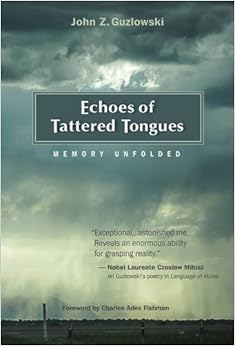
The following essay appears in Echoes of Tattered Tongues: Memory Unfolded, my book about my parents and their experiences in WWII and after the war:  

When you read about history in the history books, it’s all so clear.  The numbers make it seem that way.  Numbers, people say, don’t lie.  A thing begins on a certain date, and it ends on another particular date.  You see the beginning of a thing, and you see its end.  It all seems neat and clean, but it isn’t really.

The history books, for instance, tell us that World War II began on September 1, 1939 when the Nazis invaded Poland from the west, and the same books tell us that the war in Europe ended almost six years later on V-E day, May 8, 1945.
My father Jan Guzlowski was not a student of history.  He never had any kind of formal education, never went to school, never could read much beyond what he could read out of a prayer book, but he knew history.  He had lived through history.  He was a teenager working on his uncle’s farm in Poland when the Nazis invaded and turned his whole world upside down.  I guess you can say he learned history from the ground up.  He was captured by the Nazis in a roundup in 1940 and sent to Germany.  Like a lot of other Poles, he spent the next five years at hard labor in concentration and slave labor camps there. 
But for him, the war didn’t end when his camp was liberated sometime at the end of March 1945, and it didn’t end on Victory-in-Europe Day, May 8, 1945, and it certainly didn’t end when my family finally came to the US as refugees, Displaced Persons, in June 1951.
The war was always with him and with my mother Tekla Guzlowski, a woman who spent two years in the slave labor camps in Germany and before that had seen the other women in her family raped and murdered by the Nazis.  The trauma of what she had seen never left here.  When I was growing up, I could see it in her eyes and the way she held herself together.  My parents carried with them the pain of war and its nightmares every day of their lives.  In 1997, 42 years after the war ended, when my father was dying in a hospice, there were times when he wsa sure the doctors and nurses trying to comfort him were the Nazi guards who beat him when he was a prisoner in the concentration camp.  There were also times when he couldn't recognize me and my mother and sister.  He looked at us and was frightened.  He thought we were there to torture him.
In 2005, toward the end of my mother's life, I told her that I was going to be giving a poetry reading and that I would be reading poems about her and my dad and their experiences in the war.  I asked if there was something she wanted me to say to the audience.  "Yes," she said, "Tell them we weren't the only ones."
My parents knew that the war had always been with them, teaching them the hard lessons, teaching them how to suffer grief and pain, how to be patient, how to live without hope or bread, how to survive what would kill a person in the normal course of life. 
The war taught them that war has no beginning and no end. 

Tuesday, August 23, 2016

Noonday by Pat Barker -- A review

Noonday (Life Class, #3)Noonday by Pat Barker
My rating: 3 of 5 stars

I've been a fan of Pat Barker's novels for about 30 years, ever since I read her Regeneration Trilogy.

This recent novel is the least satisfying one.

The descriptions of the Blitz are compelling. She does what the great novelists always do. She gives you felt experiences that you would never be able to have otherwise. I've read other novels about the Blitz and watched documentaries and studied memoirs about this period but Barker does what all of them didn't do for me. She gave me the experiences on an emotional and psychological and sensual level.

The rest of the novel -- focusing on the inner lives and personal relations of a group of characters -- seemed considerably less compelling. In fact, it seemed contrived and predictable in ways Barker has never been. I kept feeling that she was lost when it came to talking about her characters. Or maybe she was bored with them and didn't want to go through the trouble of making them interesting to this reader.

In either case, read the Blitz parts and skim the rest.


View all my reviews

Sunday, August 21, 2016

Shchav Soup: Recipe for a Hot Day


Back in the old days before anybody had air-conditioning, my mother, a Polish woman from the old country, felt that the surest cure for hot weather was szczawiowa zupa, shchav, swiss chard soup.

She’d get up early on a day that promised to be in the high 90s, and she’d fix shchav. It wouldn’t take long and it didn’t require a lot of cooking, so it didn’t heat up our apartment. When she had it prepared, she’d stick it into the refrigerator to cool off. In the evening, she’d serve it for dinner when it was in the 90s both outside and inside.

Believe me, it always took the temperature down 10 degrees.

Here's my recipe :

1 teaspoon vegetable oil
2 onions, chopped
12 cups stock (I use veggie broth but you can use chicken)
1 pound fresh swiss chard, stems included, finely chopped
salt and freshly ground black pepper

Heat the oil in your soup pot over medium-high heat and sauté the onions for about 10 minutes. Add the stock and bring to a simmer. Add the swiss chard and season with salt and pepper. simmer until the sorrel is olive green in color, about 10 minutes. If you can’t get swiss chard, you can use the same amount of spinach, but make sure you add a ¼ of lemon juice to give the soup its signature tartness.

Smacznego—good eating.

PS--I've received several notes from readers saying that this soup should be made with sorrel rather than swiss chard. This is in fact true, but unfortunately when I was a child growing up in a refugee neighborhood in Chicago, we didn't have a grocer near who sold sorrel. My mother substituted swiss chard--after complaining how there were things that one could so easily find in Poland that she couldn't find anywhere in America.

Addendum to PS:

I received the following from poet Oriana Ivy regarding shchav:

Yes, it's made with wild sorrel picked at streamside. A rather sour soup -- I didn't like it all that much, but I'm sure it's full of fab nutrients. However, in the recipe I don't understand the omission of a hardboiled egg, cut in half. That half of an egg per large soup plate seemed like a kind of eye staring at me out of all that intense green. It's essential to the shchav experience. The egg complements the taste and the nutrients (the soup is fabulous for eye health).


------

If you want to read about another of my mother's Polish soups, please take a look at my blog "Simple Polish Soup."

The picture of the shchav is from the blog Fresh Approach Cooking.

Thursday, August 18, 2016

ECHOES OF TATTERED TONGUES ON SALE AT AMAZON


I hate to advertise but the price of Echoes of Tattered Tongues -- my book about my Polish parents' lives as slave laborers in Nazi Germany and refugees in America -- has dropped almost 50% at Amazon.
I'm not sure what's going on but this seems like a good time to buy it for yourself or as a gift.
 
Here's one of the poems from the book:
 
What the War Taught My Mother
 
My mother learned that sex is bad,
Men are worthless, it is always cold
And there is never enough to eat.
 
She learned that if you are stupid
With your hands you will not survive
The winter even if you survive the fall.
 
She learned that only the young survive
The camps. The old are left in piles
Like worthless paper, and babies
Are scarce like chickens and bread.
 
She learned that the world is a broken place
Where no birds sing, and even angels
Cannot bear the sorrows God gives them.
 
She learned that you don't pray
Your enemies will not torment you.
You only pray that they will not kill you.
 
____
Just click on the word Amazon.


Saturday, July 23, 2016

Oral History -- Visiting the Old Neighborhood East of Humboldt Park, Chicago

Forgotten Chicago historian Daniel Pogorzelski and I did a tour of some of my old neighborhood around Humboldt Park this last May.

I talked and talked and at some point he dragged out his iPhone and started filming.

Here's the result.  

The first three follow me as I walk from the corner of Washtenaw and Evergreen to where my house used to be at 2728 W. Evergreen.

The last one finds us talking about a section of Humboldt Park I liked a lot when I was a kid.

Part 1


Part 2


Part 3


Part 4


If you want to read more about the old neighborhood in Chicago, definitely buy my books Echoes of Tattered Tongues: Memory Unfolded and Suitcase Charlie.  

The former talks in large part about what it was like being a refugee in Chicago.  The latter is a crime novel set in the old neighborhood.  

You'll like them.  I promise.

If you don't want to buy my books, take a look at some of the other posts on this blog -- especially "Growing Up Polack" and "Sweet Home Chicago."

Wednesday, July 20, 2016

HOW MY PARENTS MET: A SURVIVORS' STORY


My parents didn’t much talk about their relationship or their love for each other or how they met.   To tell the truth, they weren’t a happy couple.  In fact, they didn’t much talk about anything to each other.  They made sure for years that they had work schedules that conflicted and kept them out of the house when the other one was home.  The only time they would really see each other was on the weekends and holidays, and you could always expect a serious fight or argument. 
It was a hell of a marriage. They went at it whenever they’d get together, even on Sunday mornings, even on Christmas Day.  It got so bad at times when I was a kid that my sister and I would plead with them to get a divorce.  What finally stopped them arguing was the death of my dad in 1997. 
But I knew the bare bones of how they met.  It was during World War II, and sometimes, if my mom wasn’t around and my dad had had a few drinks, he’d start talking about the war, the stuff he saw, the life he led.  He’d talk about how he’d been a Polish farm boy when he was captured by the Nazis and taken to Buchenwald Concentration Camp as a slave laborer.  He spent more than four years there, doing the work that the Nazis needed done because their own farm boys were out conquering the world.  My dad would talk about the work and the hunger, and once in a while he would talk about my mom.
One of the stories he told me was about the day she was captured by the Nazis.  They came to her house and killed her mom and my aunt and my aunt’s baby, kicked it to death.  My mom was able to save herself by breaking through a window and escaping into a forest.  That’s where the Nazis caught her the next day.  They shipped her and a bunch of the other girls from her village off to the slave labor camps in Germany.  When she got to the camp a week later, she was still crying so much that one of the guards said if she didn't stop crying he would shoot her. 
My dad liked to tell that story about how she was captured and how brave and strong she was when she saw the terrible things that happened to her family, and sometimes he would tell me about when she was freed.  It happened near the end of the war when he and some other slave laborers from Buchenwald were being led on a death march.  My dad and these other guys were passing the camp where my mom was, and that’s when my dad first met her.
And that’s also pretty much where my dad’s story about what happened and my mom’s story split.
The way my dad told it, the guards prodding the prisoners on this death march came up to the camp my mom was in and found all the Nazi guards gone.  It had been deserted by the men who were supposed to watch it.  According to my dad, every Nazi in Eastern Germany was trying to put as much distance between himself and the ten million or so invading Russians.  There were no guards in my mom’s camp because they had fled before the Reds that were barreling down on Germany.  When the Germans who were watching my dad realized this, they split too, leaving my dad and the other prisoners in front of my mom’s camp. 
Telling this story, my dad would always throw in at this point the fact that he had been a prisoner for 4 ½ years, and that they were hard years.  He has seen his friends beaten, hanged, starved to death, and castrated.  The German guards controlling his concentration camp never extended a human touch toward the prisoners, as far as my dad could tell, and he figured it was the same for the women.  They had seen their mother’s raped, their sisters’ bayoneted, babies thrown up in the air and shot.   When my dad and the other men saw those women standing at the camp gate with their hands on the barbwire looking at them, you can imagine what they thought, what all of them thought. 
My dad liked to say about that meeting between the men slaves and the women slaves, “First we had something to eat, and then we got married.”
He always made it sound like some kind of party, a sad party maybe, but a party nonetheless.  People in rags eating and falling into each others’ arms like heaven had suddenly sprung up where hell had flourished. 
But – he assured me – he was always a gentleman.
That’s the way my dad told it, and that’s the way I understood it for years—until after my dad died, and I asked my mom about what she remembered of that day she met my dad.
I asked her because I was writing a series of poems about them for the book that eventually became Lightning and Ashes, and I wanted to write about that day they met.
When I asked her, she said, “Sure, I’ll tell you.  Take out a legal pad.”
 She was always doing that, asking me to write things down, if she knew that she was going to tell me something that she wanted me to put in the book I was writing.  So I reached for my briefcase and took out the yellow legal pad and sat back to listen.
She told me that she first saw my dad in front of the barracks building she was in.  He was walking with a dozen other prisoners, a German soldier behind them prodding them on with some kind of rifle.  My father, she said, wasn’t fat like he got to be toward the end of his life.  He was skinny then, like two shoelaces tied together.  70 pounds, she said, and he had only one eye. He lost the other when a guard clubbed him because he begged for food.
She wasn’t such a prize after three years in the camps either, she said.  When the Americans liberated the camp she was in, they put her on a scale and found she weighed less than 100 pounds.  She was wearing woolens on her legs, a grey rag to hide her hair, and a dirty stripped dress.
And here’s what else she said to me:
“And him?  Your father?   Like I said, skinny, a shoelace, with a bleeding towel across his face from where he lost his eye. Still, he walked up to me, took my hand, and said in Polish, ‘ProszÄ™, pani.’  Yes, that’s what he said, ‘Please, miss,’ and like a proper gentleman, he clicked his heels.  I thought he was at least a count, maybe a prince.  Then just before your dad had a chance to kiss my hand, the German behind him kicked him in the pants and said, ‘Dumbkopf  raus.’  Get moving, dummy. 
“Your father was like that.  Always putting on airs, even there in the camp talking of Polish honor as if he and Poland shared a soul.  Really, he was worthless.  I wish he had left me there in the camp.  He couldn’t drive a car, he couldn’t fix a leaky roof. After the war when I asked him in the refugee camp to help me pack to come to America, and what do you think?  He took a little drink and bundled all the clothes together in a bed spread like America was across the street.
“The fool, I should have kicked him like the German soldier did when I first met him.  Instead, I kissed him and wept.”
You’re probably wondering whose story was the true story about that first meeting, my mom’s or my dad’s.  I heard both stories first hand.  Listened to my dad and my mom, and they both sounded true.  I could see it in their eyes, the way they looked at me when they told about that meeting at the camp gate, separated by barbed wire.  They probably were both telling the truth.  The truth’s never simple.  If my parents taught me one thing, that’s it.  Different people tell the truth in different ways.


________
This memoir first appeared in Shout Out, a British journal.  

Wednesday, July 6, 2016

Refugee Camp 1948

My tweet poem was featured in @escarp, the twitter poetry venue.

Refugee Camp, 1948/

I remember only a little/
the grayness of everything/
and how silently/
my mother wept./