Garrison Keillor's reading of my poem "What My Father Believed" from my book Lightning and Ashes is now available at the following link:
http://writersalmanac.publicradio.org/programs/2007/12/24/#friday
The poem talks about my father's faith, how he learned about God in Poland as a child, and how his faith sustained him in the concentration camps in Nazi Germany.
Wednesday, December 26, 2007


Thursday, December 20, 2007
Christmas and Forgiveness
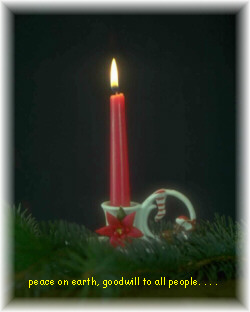 I recently gave a talk about my parents and their experiences with the Nazis to Narci Drossos’s class at Valdosta High School in Georgia. I talked about my father who spent 4 years in Buchenwald and other camps around Buchenwald, and I talked about my mother who spent 2 and half years in various slave labor camps in Germany.
During the discussion after my talk, a young man asked me a question. I’m sure it was in part sparked by the Christmas season, the talk that you hear at this time of year about “Peace on Earth and Good Will to all Men.” He asked me whether or not I forgave the Germans for what they did to my parents.
The question stopped me. I haven’t thought about it before.
Of course, I had thought about whether or not my parents forgave the Germans. My father never met a guard he would forgive. They were brutal men who beat him and killed his friends for no reason. One sub-zero winter night, these guards ran roll calls over and over. Hundreds of prisoners in pajama thin clothes stood outside in the cold and snow. By morning, about a hundred prisoners were dead.
He felt anger toward all the Germans.
.
My mother seldom talked about her experiences during the war. If you asked her what they were like, most of the time she would just say, "If they give you bread, you eat it. If they beat you, you run away."
A lot of people say, forget it; it was all a long time ago. For my parents, it was never a long time ago.
.
My parents carried the pain and nightmares with them every day.
When my father was dying in a hospice, there were times when he was sure that the doctors and the nurses were the guards who beat him when he was a prisoner in the concentration camp. There were also times when he couldn’t recognize me. He looked at me and was frightened, as if I were one of the guards.
I don’t think he ever forgave the guards for what they did to him.
.

I remember asking my mom once toward the end of her life if she forgave the Germans. She thought for a while. I’m sure she was thinking about her mother and her sister and her sister’s baby. They were killed by Germans who came to her farm house in eastern Poland. My mother saw this and escaped, at least for a while, by jumping through a broken window and making her way to a forest.
What my mother finally said surprised me. I thought she was going to say what I had heard my father say over and over that all the Germans were evil. But that’s not what she said. She told me a story about when she first was brought to Germany. She was taken to a camp where they worked the women just like they were men, making the women work sixteen, eighteen, twenty hour shifts, six days a week. She said that she knew she couldn’t survive that for long, maybe a week, maybe two.
She was saved by a German, a guard in a concentration camp.
For some reason, this German guard took pity on her. Who knows what his motives were? My mother often said that Germans thought she looked like a German, a niemka in Polish. Maybe this was what got her saved. Maybe not. Whatever it was that motivated this guard, he succeeded in getting her transferred to a different work area where the work was not killing work. She survived the war.
After telling me this story, she said, “Some Germans were good. Some bad. I forgive the good ones.”
.
All of this went through my head when the student asked me if I forgave the Germans, and here’s what I said to him, “I don’t forgive the stupid ones, the ones who think that what happened to my parents didn’t happen or it wasn’t as bad as people say.”
And I told this student why I was saying this. I told him how I had gone to an academic conference in Paderborn, Germany, in 1989, and I met a woman, a professor, there. We were chatting, and she asked me if I had ever been in Germany before. I said, “Yes, I have. I was born in Germany in fact, in Vinnenberg.”
She was surprised and asked me about this. I told her my parents had been kidnapped by the Germans and brought to work in the slave labor and concentration camps in Germany, and that I was born in a refugee camp after the war.
She said, “Your parents were lucky they were brought to Germany during the war. It was better for them here than in Poland. Here they got good food, shelter. Here they got to escape the chaos of the war.”
I looked at her and couldn’t believe that she could say such a thing. I thought about my father and mother and what they lost and suffered during the war, and I thought about how their lives after the war never shook the scars of the war. I thought about my father’s nightmares and his dead eye, the one blinded by a guard; and I thought about my mother’s coldness, her inability to feel much beyond grief and anger and hatred. I thought about how she directed that coldness and anger and hatred toward my father, my sister, and me.
I didn’t know what to say to this German professor, and didn’t say anything.
She was not the kind of person I could forgive. She was one of the stupid ones.
This is what I told the student who asked if I forgave the Germans. Some I forgave, the smart ones who recognized what had happened during the war. Some I didn't forgive, the ones who didn't recognize what had happened.
But later as I kept thinking about what the student had asked and what I had answered, I started thinking more and more about my mother. With all she had experienced in the war and with all of her coldness, anger, and hate, she was still able to find some human warmth in her heart. She was still able to forgive some Germans.
.
This makes me think that I should be able to do more than condemn the stupid ones and forgive the smart ones, that I should be able to feel more of the good will toward all of them than I do.
(The photo of the Buchenwald prisoners above was taken by Margaret Bourke-White, one of the first photographers to come to this concentration camp after the liberation.)
Wednesday, November 21, 2007
Happy Thanksgiving Day
My people were all poor people, the ones who survived to look in my eyes and touch my fingers and those who didn’t, dying instead of fever, hunger, or even a bullet in the face, dying maybe thinking of how their deaths were balanced by my birth or one of the other stories the poor tell themselves to give themselves the strength to crawl out of their own graves.

Not all of them had this strength but enough of them did, so that I’m here and you’re here reading this blog about them.
What kept them going?
.
I think about that a lot.
Maybe there's something in the DNA of people who start with nothing and end with nothing, and in between live from one handful of nothing to the next handful of nothing.
They keep going.
Through the misery in the rain and the terror in the snow, they keep going--even when there aren’t any rungs on the ladder, even when there aren’t any ladders.

(The photos are of my uncle Jan Hanczarek. He was taken to Siberia by the Russians in 1941. The Russians enslaved millions of Poles. In the first photo, he is standing with his wife and two children. I don't know their names. In the second photo, he and his wife are standing at the grave of my grandmother and my aunt and my aunt's baby who were all killed by the Nazis.)
Not all of them had this strength but enough of them did, so that I’m here and you’re here reading this blog about them.
What kept them going?
.
I think about that a lot.
Maybe there's something in the DNA of people who start with nothing and end with nothing, and in between live from one handful of nothing to the next handful of nothing.
They keep going.
Through the misery in the rain and the terror in the snow, they keep going--even when there aren’t any rungs on the ladder, even when there aren’t any ladders.
(The photos are of my uncle Jan Hanczarek. He was taken to Siberia by the Russians in 1941. The Russians enslaved millions of Poles. In the first photo, he is standing with his wife and two children. I don't know their names. In the second photo, he and his wife are standing at the grave of my grandmother and my aunt and my aunt's baby who were all killed by the Nazis.)
Wednesday, November 14, 2007
Happy Places
Sometimes when I'm doing poetry readings, I get questions about whether or not my sister and my parents and I were ever happy given the kind of experiences my parents had in Germany during the war. I can't talk for them, but I know that there were times that I was happy when I was growing up. This is a piece I wrote a couple years ago about those times.


It makes a picture I don’t want to forget.
Maybe we remember these special places and special times and turn to them because they were the places and times our parents were happy, before their lives took their inevitable turns. Maybe not. Like most of us, I’m not good at figuring out the complex why of things.
But I remember a Sunday morning, and you remember sitting at a ball game between your mother and father, and both are screaming at the batter in a way that frightens you just a little but you know is okay; or you remember a day on a beach in Ocean City with your mother laughing at your father wearing her bathing cap pulled down over his eyes; or you remember your father sitting at the piano with a cigarette between his lips playing a piece you love like “Wild Colonial Boy” or “Stardust” while your mother stands at the ironing board straightening a pleat in her skirt with steam.
We all have special perfect places, places where we feel most ourselves, most comfortable. In these special places, we feel our “self” most fully; we feel that what we were meant "to be" is suddenly "is"; we feel that our pasts, our presents, and our futures are mingling. We feel the joyful arms of our guardian angels and personal saints embracing us, and we feel their warmth touching us in seventeen places all at once. For some people, this special place is a chair in the kitchen or a bleacher at a baseball game.
Happy people are those who know where this place is.
They can go there when they need to: maybe not in their darkest moments (at the bedside of a dying parent or friend, or when a woman or man they truly loved leaves them finally with no offer of a hand to hold for even a moment), but surely in those moments after those moments they can turn to these holy places.

For me this place was a place in time: The June day I turned four, a Sunday in 1952, when I stood in the garden in the back of a house we were renting from a veteran of the First World War, an alcoholic with a plate in his head to cover the spot where a shell fragment had carried away a piece of his skull (his name was Ponchek which means donut in Polish and always made me laugh to say it), and I stood in his garden among Black Eyed Susans with their yellow petals and long necks. And my mother in a white dress with little blue flowers sat in the garden between me and my sister, and my father stood in front of us with a Brownie Cadet box camera.
He was asking us in Polish to smile, while my mother told me about the day ahead, how we would go to Kiddie Land up in Melrose Park, Illinois, and my sister Danusha and I would ride on the blue and yellow and red cars and the roller coaster built just for kids. My mother made it sound like there was something special about being a kid the way she talked about the day we had planned.
It makes a picture I don’t want to forget.
Maybe we remember these special places and special times and turn to them because they were the places and times our parents were happy, before their lives took their inevitable turns. Maybe not. Like most of us, I’m not good at figuring out the complex why of things.
But I remember a Sunday morning, and you remember sitting at a ball game between your mother and father, and both are screaming at the batter in a way that frightens you just a little but you know is okay; or you remember a day on a beach in Ocean City with your mother laughing at your father wearing her bathing cap pulled down over his eyes; or you remember your father sitting at the piano with a cigarette between his lips playing a piece you love like “Wild Colonial Boy” or “Stardust” while your mother stands at the ironing board straightening a pleat in her skirt with steam.
Tuesday, November 6, 2007
November 11, 1918--The Day World War I Ended
I first heard of World War I when we came to America as Displaced Persons in 1951. We were refugees after World War II, and we moved into a basement apartment on Hamilton Street in Chicago.
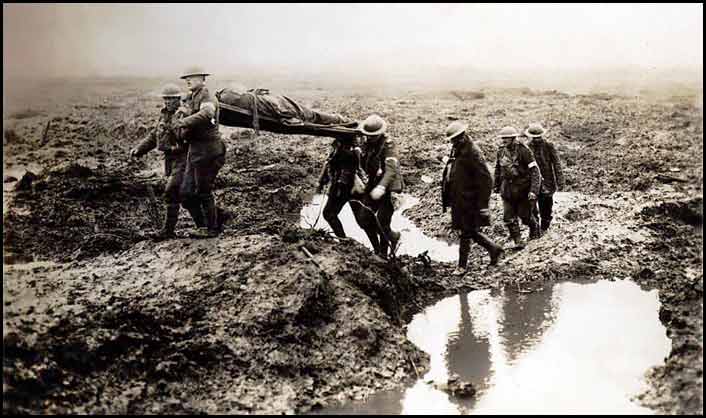
Our landlord was a veteran of the First World War. He was a Polish American named Ponchek. He was also a drunk, but that wasn't anything special. There were a lot of drunks around. What made Ponchek special was that he had a steel plate in his head. As a kid and a recent immigrant to America, he had been drafted and sent to France to stop the Germans who were trying to rip France apart and shove it into the Atlantic. He ended up in the trenches in France in late October fighting the Germans, and a bullet took off the top of his head. The doctors cut away what bone they could, cleaned out the wound, and screwed a steel plate into the skull bone.
This fascinated me when I was a kid. I wondered about that plate, and what it felt like. Did Ponchek always feel a weight pressing down on his head? Was it like wearing a steel hat? A steel helmet? And I wondered what they covered the plate with. Skin? And where did it come from? Was it his skin or someone else's? I never could ask.
Like a lot of the veterans I knew, he was frightening. He wasn't a guy you wanted to spend a lot of time talking to.
Veterans were men who limped. They dragged their legs behind them like Lon Chaney in the Mummy movie. They were men who had wooden legs that creaked when they walked past you and the other kids sitting on the stoop. These veterans had no arms or only one arm, or were missing fingers or hands, or ears.
My dad, a guy who lost his left eye when he was clubbed by a Nazi guard in a concentration camp, used to go to a bar where the owner had a black, shiny rubber hand. He lost his real hand during the Warsaw Uprising in 1944 when he shoved a homemade grenade into the steel treads of a German tank. The black rubber hand was like some kind of weird toy. Sometimes, it looked like a black fist, sometimes it looked like an eight ball.
Sometimes, a vet without arms or legs sat on the sidewalk in front of this bar. He had a cloth hat in front of him, and he was selling pencils. He'd sit there smiling, making chit chat with the guys walking in and out of the bar. You'd toss him a nickel, and you could take a pencil, but most guys didn't. Who needs a pencil?
Veterans were frightening. Some of them beat their kids and got drunk and had trouble getting through the day. They had trouble getting through the night too. There were these two little girls who lived two doors away, Patty and Cathy. Their dad was a Korean War veteran, and he would come home from his job at about midnight. The kids and their mom had to be out of their basement apartment then. He would beat and curse all of them if they weren't. They'd have to walk around the neighborhood until he was safely in bed, asleep. This veteran didn't like to fall asleep with people in the house. Everyone knew he was crazy.
Ponchek was a veteran too, and -- like I said -- he was a drunk and a man with a steel plate in his head. One time he and his two buddies got so drunk that they all came down to our basement apartment and tried to force my mother into giving them money for whiskey. There she was alone in a house with her two little kids, and this drunk and his two drunk buddies came around trying to take money from her. They told her that she hadn't paid the rent, and that if she didn't paid them, they would throw her out on the street. What kind of guys would do that? She pushed Poncheck down and kicked him, and took a broom and beat him and his friends as they tried to get away from her. My mom was a veteran too; she spent two and a half years in a Nazi slave labor camp.
Three or four years later, my mom and dad and my sister and me visited Ponchek in the big Veterans Administration hospital on the south side of Chicago. We didn't have a car, and so we had to take buses, and it seemed like it took forever to get to the hospital. This must have been about 1956 or 1957. The hospital was full of veterans, men from World War I and World War II and the Korean War. Ponchek was dying from some kind of stomach cancer, and he was in a lot of pain. We came to say goodbye to him. We found him in a bed in the corridor because there were no available rooms.
He was happy to see us. My parents had brought him some cigarettes, and my dad gave him one, and lit it for him. My sister and I stood there watching my mom and dad and Ponchek smoke and talk. They talked about those days on Hamilton, and the good times they had.
They didn't mention his steel plate and his drinking and his craziness.
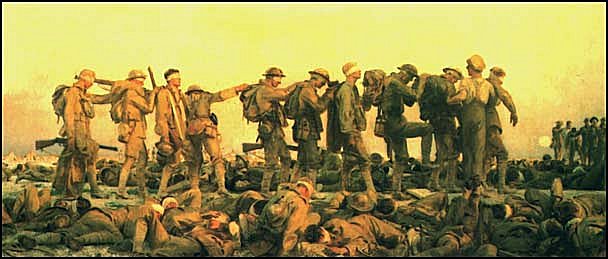
PS: Before I sign off, let me say something about Veterans Day.
It grows out of Armistice Day, the day the carnage of World War I ended. It ended on the 11th hour of the 11 th day of the 11th month.
Here's a poem by John McCrae called "In Flanders Field." He was a doctor who wrote the poem in 1915 for a friend who died in the Battle for Flanders Field. The battle lasted 100 days and cost 400,000 Allied and German casualties. The war went on for another 3 years after that, and millions of people died in those years.
Here's McCrae's poem:
In Flanders fields the poppies blow
Between the crosses, row on row,
That mark our place; and in the sky
The larks, still bravely singing, fly
Scarce heard amid the guns below.
We are the Dead. Short days ago
We lived, felt dawn, saw sunset glow,
Loved, and were loved, and now we lie
In Flanders fields.
Take up our quarrel with the foe:
To you from failing hands we throw
The torch; be yours to hold it high.
If ye break faith with us who die
We shall not sleep, though poppies grow
In Flanders fields.

When I told my daughter Lillian that I was going to use the Flanders Field poem, she suggested another poem.
Here's what Lillian wrote:
"Personally, I like the Ode of Remembrance (the 3rd and 4th stanzas of Binyon's "For the Fallen") that they use throughout the "British Empire" at Remembrance Day commemorations. I think Binyon's poem, at least the following two stanzas, is more universal. It could be any war, any century, any side; and I think that is what Remembrance Day is for, remembering every fallen soldier--every kid who is too naive or too idealistic or too stupid or too gullible and so they join up for all of the right and all of the wrong reasons and then they die, painfully and horribly and wastefully, but bravely and nobly."
And here's Binyon's poem:
They went with songs to the battle, they were young,
Straight of limb, true of eye, steady and aglow.
They were staunch to the end against odds uncounted,
They fell with their faces to the foe.
They shall grow not old, as we that are left grow old;
Age shall not weary them, nor the years condemn.
At the going down of the sun and in the morning
We will remember them.
PPS: Let me say just one more thing:
War comes to us, and we weep at our losses and pray for our delivery. And then peace comes and then peace goes, and wars come and come and come.
Our landlord was a veteran of the First World War. He was a Polish American named Ponchek. He was also a drunk, but that wasn't anything special. There were a lot of drunks around. What made Ponchek special was that he had a steel plate in his head. As a kid and a recent immigrant to America, he had been drafted and sent to France to stop the Germans who were trying to rip France apart and shove it into the Atlantic. He ended up in the trenches in France in late October fighting the Germans, and a bullet took off the top of his head. The doctors cut away what bone they could, cleaned out the wound, and screwed a steel plate into the skull bone.
This fascinated me when I was a kid. I wondered about that plate, and what it felt like. Did Ponchek always feel a weight pressing down on his head? Was it like wearing a steel hat? A steel helmet? And I wondered what they covered the plate with. Skin? And where did it come from? Was it his skin or someone else's? I never could ask.
Like a lot of the veterans I knew, he was frightening. He wasn't a guy you wanted to spend a lot of time talking to.
Veterans were men who limped. They dragged their legs behind them like Lon Chaney in the Mummy movie. They were men who had wooden legs that creaked when they walked past you and the other kids sitting on the stoop. These veterans had no arms or only one arm, or were missing fingers or hands, or ears.
My dad, a guy who lost his left eye when he was clubbed by a Nazi guard in a concentration camp, used to go to a bar where the owner had a black, shiny rubber hand. He lost his real hand during the Warsaw Uprising in 1944 when he shoved a homemade grenade into the steel treads of a German tank. The black rubber hand was like some kind of weird toy. Sometimes, it looked like a black fist, sometimes it looked like an eight ball.
Sometimes, a vet without arms or legs sat on the sidewalk in front of this bar. He had a cloth hat in front of him, and he was selling pencils. He'd sit there smiling, making chit chat with the guys walking in and out of the bar. You'd toss him a nickel, and you could take a pencil, but most guys didn't. Who needs a pencil?
Veterans were frightening. Some of them beat their kids and got drunk and had trouble getting through the day. They had trouble getting through the night too. There were these two little girls who lived two doors away, Patty and Cathy. Their dad was a Korean War veteran, and he would come home from his job at about midnight. The kids and their mom had to be out of their basement apartment then. He would beat and curse all of them if they weren't. They'd have to walk around the neighborhood until he was safely in bed, asleep. This veteran didn't like to fall asleep with people in the house. Everyone knew he was crazy.
Ponchek was a veteran too, and -- like I said -- he was a drunk and a man with a steel plate in his head. One time he and his two buddies got so drunk that they all came down to our basement apartment and tried to force my mother into giving them money for whiskey. There she was alone in a house with her two little kids, and this drunk and his two drunk buddies came around trying to take money from her. They told her that she hadn't paid the rent, and that if she didn't paid them, they would throw her out on the street. What kind of guys would do that? She pushed Poncheck down and kicked him, and took a broom and beat him and his friends as they tried to get away from her. My mom was a veteran too; she spent two and a half years in a Nazi slave labor camp.
Three or four years later, my mom and dad and my sister and me visited Ponchek in the big Veterans Administration hospital on the south side of Chicago. We didn't have a car, and so we had to take buses, and it seemed like it took forever to get to the hospital. This must have been about 1956 or 1957. The hospital was full of veterans, men from World War I and World War II and the Korean War. Ponchek was dying from some kind of stomach cancer, and he was in a lot of pain. We came to say goodbye to him. We found him in a bed in the corridor because there were no available rooms.
He was happy to see us. My parents had brought him some cigarettes, and my dad gave him one, and lit it for him. My sister and I stood there watching my mom and dad and Ponchek smoke and talk. They talked about those days on Hamilton, and the good times they had.
They didn't mention his steel plate and his drinking and his craziness.
PS: Before I sign off, let me say something about Veterans Day.
It grows out of Armistice Day, the day the carnage of World War I ended. It ended on the 11th hour of the 11 th day of the 11th month.
Here's a poem by John McCrae called "In Flanders Field." He was a doctor who wrote the poem in 1915 for a friend who died in the Battle for Flanders Field. The battle lasted 100 days and cost 400,000 Allied and German casualties. The war went on for another 3 years after that, and millions of people died in those years.
Here's McCrae's poem:
In Flanders fields the poppies blow
Between the crosses, row on row,
That mark our place; and in the sky
The larks, still bravely singing, fly
Scarce heard amid the guns below.
We are the Dead. Short days ago
We lived, felt dawn, saw sunset glow,
Loved, and were loved, and now we lie
In Flanders fields.
Take up our quarrel with the foe:
To you from failing hands we throw
The torch; be yours to hold it high.
If ye break faith with us who die
We shall not sleep, though poppies grow
In Flanders fields.
When I told my daughter Lillian that I was going to use the Flanders Field poem, she suggested another poem.
Here's what Lillian wrote:
"Personally, I like the Ode of Remembrance (the 3rd and 4th stanzas of Binyon's "For the Fallen") that they use throughout the "British Empire" at Remembrance Day commemorations. I think Binyon's poem, at least the following two stanzas, is more universal. It could be any war, any century, any side; and I think that is what Remembrance Day is for, remembering every fallen soldier--every kid who is too naive or too idealistic or too stupid or too gullible and so they join up for all of the right and all of the wrong reasons and then they die, painfully and horribly and wastefully, but bravely and nobly."
And here's Binyon's poem:
They went with songs to the battle, they were young,
Straight of limb, true of eye, steady and aglow.
They were staunch to the end against odds uncounted,
They fell with their faces to the foe.
They shall grow not old, as we that are left grow old;
Age shall not weary them, nor the years condemn.
At the going down of the sun and in the morning
We will remember them.
PPS: Let me say just one more thing:
War comes to us, and we weep at our losses and pray for our delivery. And then peace comes and then peace goes, and wars come and come and come.
Friday, October 26, 2007
WOMEN IN WAR
"Tell them we weren't the only ones."


If you look at the memoirs left by women who had been in the camps, not many of these memoirs talk about the sexual brutality that took place in the camps. One of them that does is Seed of Sarah by Judith Isaacson. In fact, she talks about women’s silence about being sexually brutalized. In her book, Isaacson relates a conversation she had with her daughter about what happened to the women her mother knew during the war. Isaacson tells her that most of them had been raped and killed either by Nazis or the Russians. When her daughter wonders why no one ever hears about all of the women who were raped during the war, Isaacson answers, "The Anne Franks who survived rape don’t write their stories.”
Was my mother raped? Was she sexually brutalized?
This comes from a UNICEF post on Sexual Violence as a Weapon of War:
"The State of the World's Children 1996 report notes that the disintegration of families in times of war leaves women and girls especially vulnerable to violence. Nearly 80 per cent of the 53 million people uprooted by wars today are women and children. When fathers, husbands, brothers and sons are drawn away to fight, they leave women, the very young and the elderly to fend for themselves. In Bosnia and Herzegovina, Myanmar and Somalia, refugee families frequently cite rape or the fear of rape as a key factor in their decisions to seek refuge."(http://www.unicef.org/sowc96pk/sexviol.htm)
My mother wasn’t the only one.
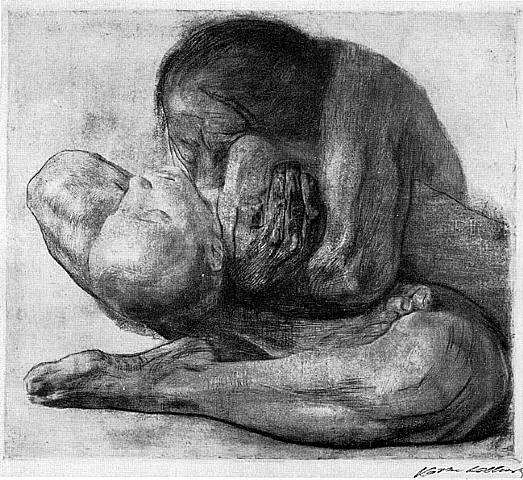
My mother said that to me once just before I did a lecture about her experiences and my dad’s experiences as slave laborers in Nazi Germany. She wanted me to be sure I told the audience that my parents weren’t the only people that terrible things happened to in those concentration camps. I promised my mother I would, and in fact, when I got to the lecture hall that night and stood up in front of that audience the first thing I did was tell them what my mother told me to.
.
“We weren’t the only ones.”
For a long time, I thought I knew what she meant by that sentence. My mom hadn’t told me much about her experiences. My dad, however, had told me a lot about his terrible experiences during his five years in the Germany concentration camp system, and he also told me something about what had happened to my mother and her family, her mother, her sister, and her sister’s baby. They had been brutally murdered by the Nazis who came to their farm in eastern Poland. As I said, my mother didn’t talk about this experience or many of her other experiences for much of my life with her. I talk about this in one of my poems, “Here’s What My Mother Won’t Talk About.” In it, my mother’s response to my questions about her time under the Nazis is to tell me that I’m a fool and “If they give you bread, eat it. If they beat you, run.” That was pretty much it.
This last September, Tracy Meyers, the Director of the Women and Gender Studies Program at Valdosta State University, invited me to do a lecture and poetry reading about my mother’s experiences during and after the war.
To prepare for it, I started thinking about my mother’s experiences and her silence about so much that had happened to her. I re-read an article I read years before by Jessica Alpert called "Muted Testimony: Rape and Gendered Violence of the Holocaust." Alpert’s argument was that women tended not to talk about their experiences in the concentration camps and the death camps because of the sexual brutality they experienced. This led me to do some more research, and what I found out was that a lot of the histories and memoirs and literary writings about war talk about what men are doing in a war, but these histories don’t always look at what’s happening to women and how they are experiencing war.
It’s not surprising. Women’s experiences of war tend to be different than men’s experiences of war. Women’s experience tend to be brutal and without much glory or sense of victory or accomplishment. Doing a Google search of “women” and “war” brings up things like the Japanese rape of the city of Nanking. The actual number of rapes that occurred there is hard to pin down but they range from 20,000 to 80,000. One source said that when the Japanese soldiers weren’t raping the women, “They took great pleasure in forcing fathers to rape their daughters and sons to rape their mothers.” British historian Antony Beevor says in Berlin: The Downfall 1945 that the Russians raped millions of women as they moved west, pushing back the Germans in the final months of World War II. These women were not only German women but also Russian women and Polish women and Ukrainian women and the women in the liberated concentration and death camps.
.
In her study Victims, Heroes, Survivors: Sexual Violence on the Eastern Front in World War II (available on the internet), historian Wendy Jo Gertjejanssen argues that sexual violence against women by Russians and Germans both was common and seldom talked about.
Dr. Gertjejanssen says at the start of her study that sexual violence during the war happened to many, many women, perhaps millions, on the eastern front. These women were sexually abused and harassed, they were forced into military brothels, and they were raped and mutilated. Also, because they were deliberately starved, these women often found that they had to exchange sex for food and water to stay alive.
If you look at the memoirs left by women who had been in the camps, not many of these memoirs talk about the sexual brutality that took place in the camps. One of them that does is Seed of Sarah by Judith Isaacson. In fact, she talks about women’s silence about being sexually brutalized. In her book, Isaacson relates a conversation she had with her daughter about what happened to the women her mother knew during the war. Isaacson tells her that most of them had been raped and killed either by Nazis or the Russians. When her daughter wonders why no one ever hears about all of the women who were raped during the war, Isaacson answers, "The Anne Franks who survived rape don’t write their stories.”
Was my mother raped? Was she sexually brutalized?
These are hard questions for me to think about. They make me feel very sad. You want to think about the good things that happened to the ones you love; you don’t want to think of all the terrible things that might have happened. If my mother herself was not the victim of sexual brutalization, she must have seen it, and it must have hurt her deeply. One of the things my father frequently talked about and that I heard about from the time I was a kid was the story about the German soldier cutting a woman’s breasts with his bayonet. This woman was my aunt Genja who died with her baby and my grandmother when the Germans came to my mother’s farm.
Toward the end of her life, my mother told me about how she cried and couldn’t stop crying after this killing. I wrote a poem about it called “Grief.” It talks about how she was taken to Germany after the death of her sister Genja and the baby and her mother. Here it is:
Grief
My mother cried for a week, first in the boxcars
then in the camps. Her friends said, “Tekla,
don’t cry, the Germans will shoot you
and leave you in the field,” but she couldn’t stop.
Even when she had no more tears, she cried,
cried the way a dog will gulp for air
when it’s choking on a stick or some bone
it’s dug up in a garden and swallowed.
The woman in charge gave her a cold look
and knocked her down with her fist like a man,
and then told her if she didn’t stop crying
she would call the guard to stop her crying.
But my mother couldn’t stop. The howling
was something loose in her nothing could stop.
----------------------------------------------
I want to say one more things. The poet Christina Pacosz sent me an email a couple weeks ago reminding me that bad things haven’t stopped happening with the end of World War II. She’s absolutely right.
My mother cried for a week, first in the boxcars
then in the camps. Her friends said, “Tekla,
don’t cry, the Germans will shoot you
and leave you in the field,” but she couldn’t stop.
Even when she had no more tears, she cried,
cried the way a dog will gulp for air
when it’s choking on a stick or some bone
it’s dug up in a garden and swallowed.
The woman in charge gave her a cold look
and knocked her down with her fist like a man,
and then told her if she didn’t stop crying
she would call the guard to stop her crying.
But my mother couldn’t stop. The howling
was something loose in her nothing could stop.
----------------------------------------------
I want to say one more things. The poet Christina Pacosz sent me an email a couple weeks ago reminding me that bad things haven’t stopped happening with the end of World War II. She’s absolutely right.
This comes from a UNICEF post on Sexual Violence as a Weapon of War:
"The State of the World's Children 1996 report notes that the disintegration of families in times of war leaves women and girls especially vulnerable to violence. Nearly 80 per cent of the 53 million people uprooted by wars today are women and children. When fathers, husbands, brothers and sons are drawn away to fight, they leave women, the very young and the elderly to fend for themselves. In Bosnia and Herzegovina, Myanmar and Somalia, refugee families frequently cite rape or the fear of rape as a key factor in their decisions to seek refuge."(http://www.unicef.org/sowc96pk/sexviol.htm)
My mother wasn’t the only one.
(Drawing by Kathe Kollwitz)
Wednesday, October 10, 2007
HISTORY AND NUMBERS
I was invited by Gladys Kirkland to give a series of poetry readings/lectures about my parents and their experiences in World War II to the Freshmen Social Studies students at Valdosta High School last Thursday (Oct.4), and I wrote up an introduction that I hoped would get the students interested in what I was telling them about.
I know that a lot of the students I had over the years at Eastern Illinois University hated to hear about wars and such because it sounded to them like war was just a bunch of numbers. I was afraid that the students at VHS would respond like that, so I wrote up this introduction. I wanted them to know that the war was more than just numbers. I ended up not using the introduction because the students at VHS didn't seem afraid of numbers, but I hate to write something and not use it so I thought I would post my introduction here.
HISTORY AND NUMBERS
History is full of numbers, dates, fractions, the number of this, the number of that.
Maybe you’ve heard of the M-1 rifle or the V-2 bomb or the B-17 bomber, or 2nd Lieutenants and Privates first class and 5-star generals.
We even give numbers to Wars. There was the 100 Year War, the War of 1812, the First World War, and World War II. Right now the US is fighting what’s some times called the Second Gulf War.
But it's the Second World War that I'm here to talk about.
If you go on line, and Google WWII statistics, you’ll get a lot of numbers, enough to fill up a couple or more textbooks.
You’ll find out that the Nazis murdered 6,000,000 Jews. You’ll find out that altogether 52,000,000 people died in the war, more or less. You’ll hear that 20 million died in Russia, 7,000,000 died in Germany. 2 million in Japan. I was surprised to hear that Yugoslavia, a country that I don’t think much about anymore and probably never did, lost 1.7 million people. The country my parents came from was Poland, and it lost 1/6 of its population. Before the war, there were 36 million Poles; that means about 6 million died. In Warsaw, the capitol city of Poland, a quarter of a million civilians died during a 60 day battle to throw the Germans out in 1944.
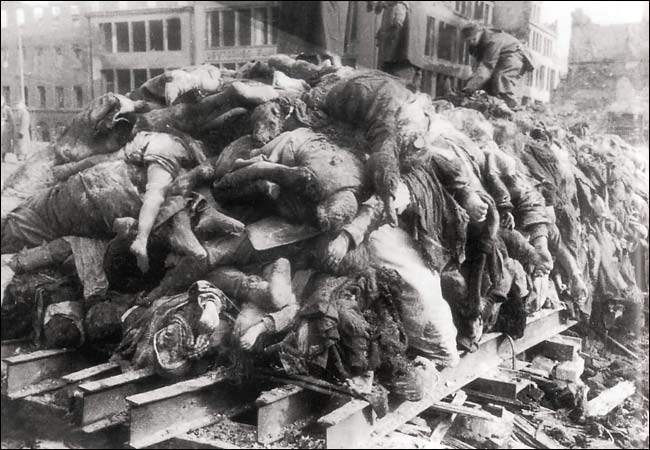
America got off pretty easy in WWII. It lost just a half a million, mostly soldiers. In those other countries it was about half soldiers and half civilians. “Civilians” is another way of saying wives and husbands and their children.
There are also the numbers involved in how much was spent on the war. The numbers here run pretty high. The U.S. spent the most money on the war, an estimated $341 billion. Germany was next, with $272 billion, followed by the Soviet Union with $192 billion. All the billions spent probably add up to a trillion.
There are also numbers associated with what kind of mess was made by the war. The Soviet government calculated that Russia lost 30 percent of its national wealth. As far as I can figure, that means it lost one out of every three of everything: houses, banks, cars, schools, railroads, bikes, and farms.
In Germany, bombing and shelling produced 4 billion cu m (5 billion cu yd) of rubble. I don’t know how big a pile that is but it sounds like a big pile of rubble. By the end of the war, the Germany capitol Berlin had been pretty much leveled. The people that count up such things estimate that 400,000 buildings were destroyed in Berlin.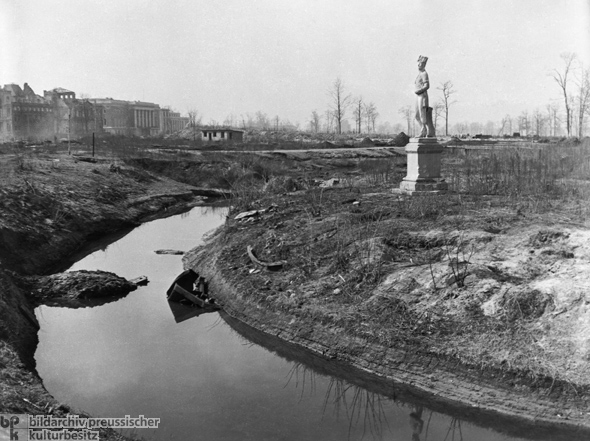 After the war, the Germans who survived the war got shovels and bulldozers and shoved all of those 400,000 building out of the city. Altogether there was about 17,000,000 cubic yards of rubble, bricks, bits of glass and silverware that melted together during the bombings, wood beams, busted up furniture, rusting pipes and porcelain bathtubs. It made a mountain 390 foot tall that in the past was used by Berliners looking to ski in the winter. It’s called Teufelsberg in German. That means Devil’s Mountain.
War does generate a lot of numbers, and the numbers tend to be big.
I was talking to a friend at VSU, a mathematician, a person who studies numbers, and she said that most people can’t imagine a number larger than 1000.
I know I can’t.
I only think about small numbers, human numbers. My mother, for example, would be one, my dad would be another one. That’s two, the two my poems are about.
(The photos are from the book The Fire: The Bombing of Germany, 1939-1945 by the historian Jörg Friedrich--there's a link to it on the right hand side.)
I know that a lot of the students I had over the years at Eastern Illinois University hated to hear about wars and such because it sounded to them like war was just a bunch of numbers. I was afraid that the students at VHS would respond like that, so I wrote up this introduction. I wanted them to know that the war was more than just numbers. I ended up not using the introduction because the students at VHS didn't seem afraid of numbers, but I hate to write something and not use it so I thought I would post my introduction here.
HISTORY AND NUMBERS
History is full of numbers, dates, fractions, the number of this, the number of that.
Maybe you’ve heard of the M-1 rifle or the V-2 bomb or the B-17 bomber, or 2nd Lieutenants and Privates first class and 5-star generals.
We even give numbers to Wars. There was the 100 Year War, the War of 1812, the First World War, and World War II. Right now the US is fighting what’s some times called the Second Gulf War.
But it's the Second World War that I'm here to talk about.
If you go on line, and Google WWII statistics, you’ll get a lot of numbers, enough to fill up a couple or more textbooks.
You’ll find out that the Nazis murdered 6,000,000 Jews. You’ll find out that altogether 52,000,000 people died in the war, more or less. You’ll hear that 20 million died in Russia, 7,000,000 died in Germany. 2 million in Japan. I was surprised to hear that Yugoslavia, a country that I don’t think much about anymore and probably never did, lost 1.7 million people. The country my parents came from was Poland, and it lost 1/6 of its population. Before the war, there were 36 million Poles; that means about 6 million died. In Warsaw, the capitol city of Poland, a quarter of a million civilians died during a 60 day battle to throw the Germans out in 1944.
America got off pretty easy in WWII. It lost just a half a million, mostly soldiers. In those other countries it was about half soldiers and half civilians. “Civilians” is another way of saying wives and husbands and their children.
There are also the numbers involved in how much was spent on the war. The numbers here run pretty high. The U.S. spent the most money on the war, an estimated $341 billion. Germany was next, with $272 billion, followed by the Soviet Union with $192 billion. All the billions spent probably add up to a trillion.
There are also numbers associated with what kind of mess was made by the war. The Soviet government calculated that Russia lost 30 percent of its national wealth. As far as I can figure, that means it lost one out of every three of everything: houses, banks, cars, schools, railroads, bikes, and farms.
In Germany, bombing and shelling produced 4 billion cu m (5 billion cu yd) of rubble. I don’t know how big a pile that is but it sounds like a big pile of rubble. By the end of the war, the Germany capitol Berlin had been pretty much leveled. The people that count up such things estimate that 400,000 buildings were destroyed in Berlin.
After the war, the Germans who survived the war got shovels and bulldozers and shoved all of those 400,000 building out of the city. Altogether there was about 17,000,000 cubic yards of rubble, bricks, bits of glass and silverware that melted together during the bombings, wood beams, busted up furniture, rusting pipes and porcelain bathtubs. It made a mountain 390 foot tall that in the past was used by Berliners looking to ski in the winter. It’s called Teufelsberg in German. That means Devil’s Mountain.War does generate a lot of numbers, and the numbers tend to be big.
I was talking to a friend at VSU, a mathematician, a person who studies numbers, and she said that most people can’t imagine a number larger than 1000.
I know I can’t.
I only think about small numbers, human numbers. My mother, for example, would be one, my dad would be another one. That’s two, the two my poems are about.
(The photos are from the book The Fire: The Bombing of Germany, 1939-1945 by the historian Jörg Friedrich--there's a link to it on the right hand side.)
Subscribe to:
Posts (Atom)